
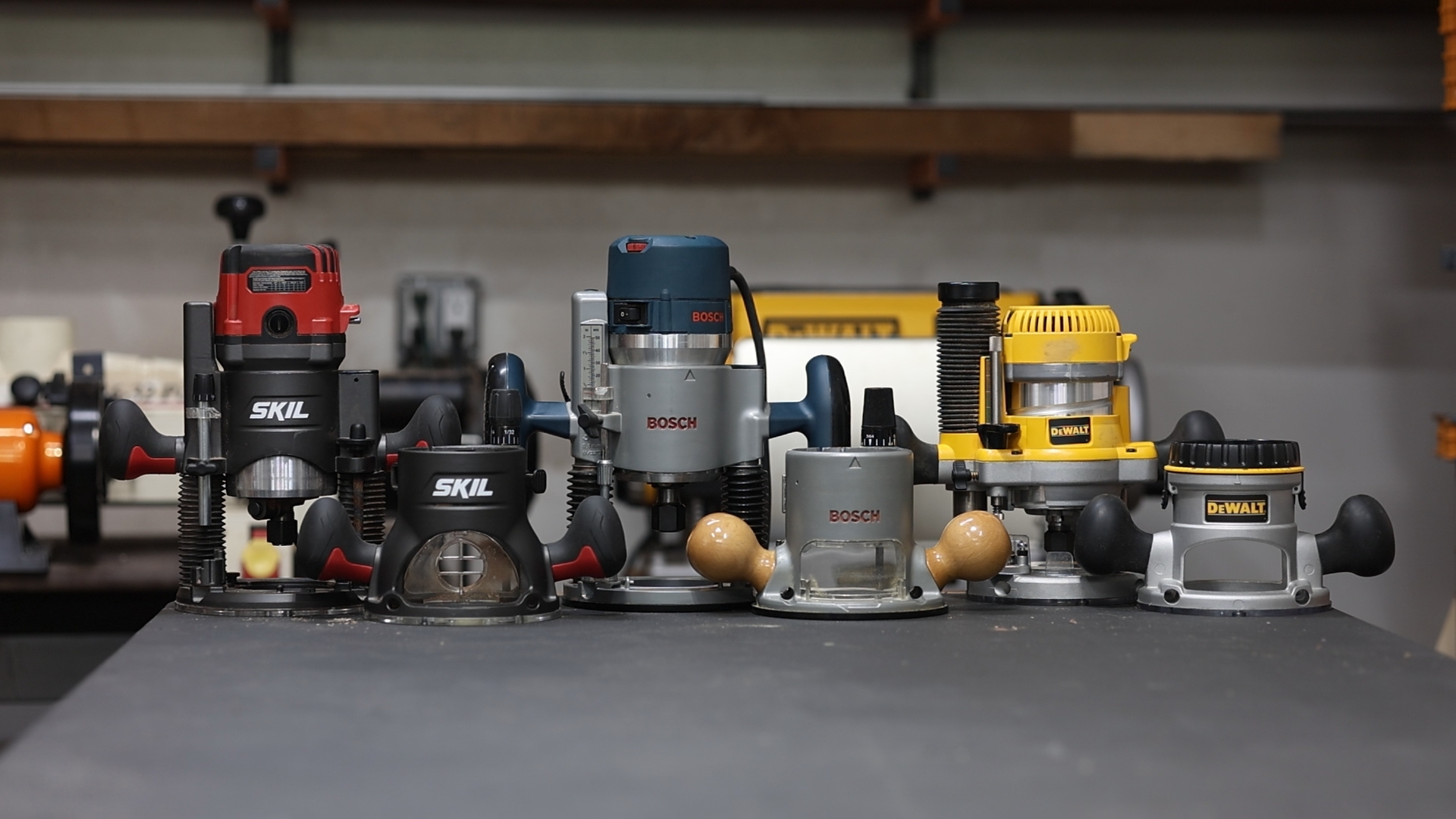
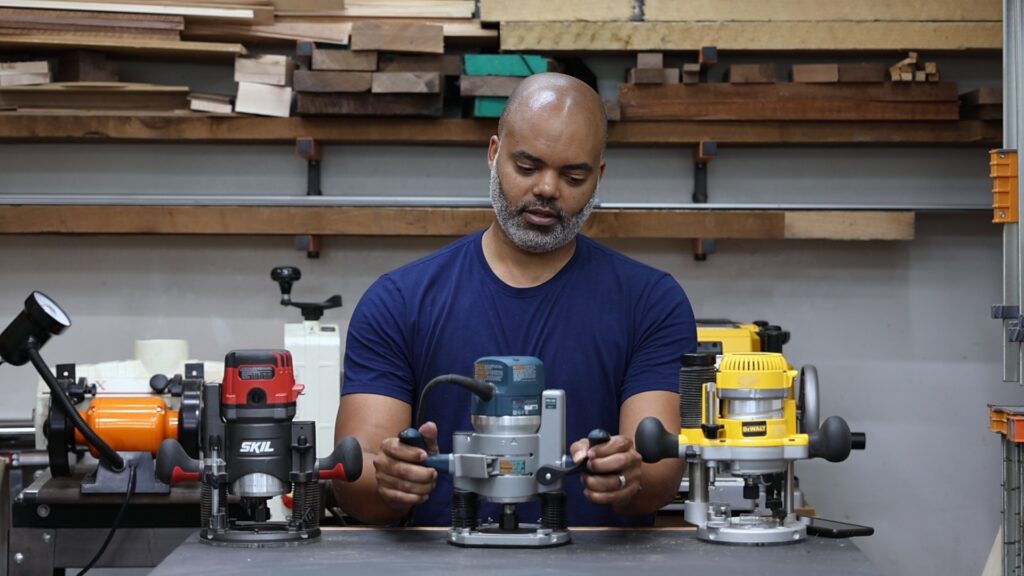
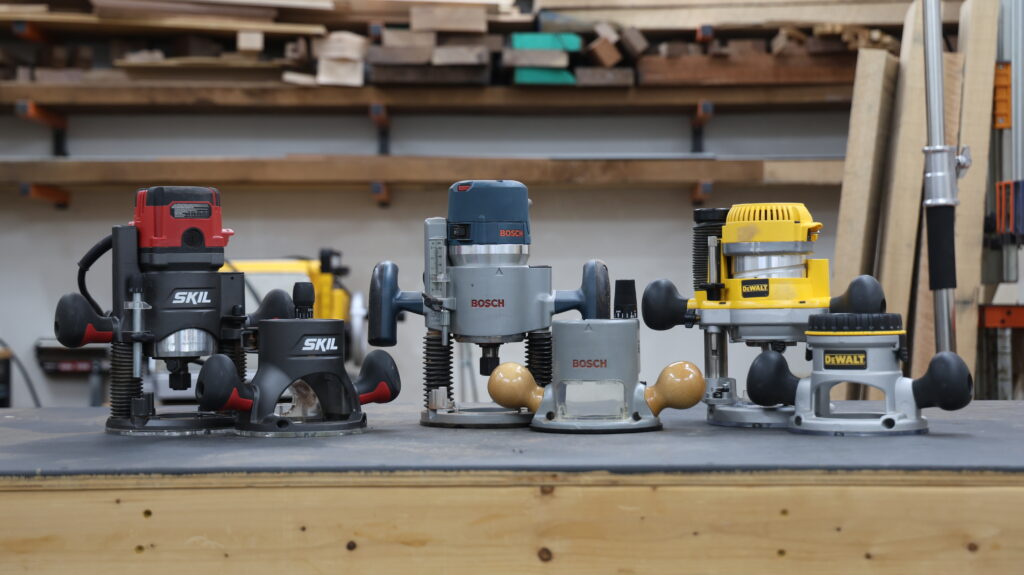
Choosing the best router kit can feel overwhelming when you’re staring down the top three contenders in the fixed and plunge base category. In this SKIL vs Bosch vs DeWalt Router Kit Comparison, we compare the SKIL RT1322-00, DeWalt DW618PKB, and Bosch 1617EVSPK. All offer 2+ horsepower motors, variable speed control, and both fixed and plunge bases. But with prices differing by about $100 from the SKIL to the DeWalt and Bosch, and each router bringing unique strengths to the table, which one deserves a place in your shop?
I purchased and extensively tested all three of these router kits across various woodworking applications. This isn’t a spec-sheet comparison—it’s real-world experience with all three routers, highlighting their genuine differences and helping you understand which one matches your specific needs and budget.
Watch the Full Video Review
—or—
Prefer to read? Keep scrolling for the complete written review with detailed specs and FAQ.
Motor Power & Performance: Does More HP Matter?
The SKIL stands out immediately with its 2.5 HP, 14-amp motor—noticeably more powerful than the 2.25 HP, 12-amp motors in both the DeWalt and Bosch. In practical terms, this translates to extra headroom when working with larger bits or dense hardwoods.
Does this make a huge difference in everyday routing? Honestly, not really. All three routers have plenty of power for typical applications. The SKIL’s extra power becomes noticeable primarily when pushing large panel-raising bits through hardwoods or when the router is under sustained heavy load. For most routing operations, you won’t feel limited by any of these motors.
All three routers feature electronic feedback systems that maintain consistent RPM under load—the SKIL and DeWalt call it “electronic feedback,” while Bosch terms it “Constant Response Circuitry.” The terminology differs, but the result is the same: steady, predictable performance that doesn’t bog down mid-cut.
The soft-start feature on all three routers provides controlled, safe startups without the jarring kick that older routers exhibit. This is standard on modern routers, but it’s worth noting that all three implement it well.
Winner: SKIL (for raw power), but it’s close
Speed Control: Innovation vs. Simplicity
This is where the SKIL truly differentiates itself with its LCD speed control system. Instead of a simple dial, the SKIL features a digital display that actually helps you determine optimal speed based on three factors: bit type, bit size, and material (hardwood, softwood, or plastic). Input those parameters, hit set, and the router recommends an appropriate RPM.
You’re not locked into that recommendation—you can still adjust up or down using plus/minus buttons—but having a baseline takes the guesswork out of speed selection, especially with unfamiliar bits or materials. It’s genuinely useful for beginners and experienced woodworkers alike.
The DeWalt and Bosch both use traditional dial controls marked 1-6. Turn the dial, set your speed, done. There’s no learning curve, and if you already know what speed you need, it’s actually faster than navigating the SKIL’s menu system.
For router table use, the dial systems on the DeWalt and Bosch are slightly more convenient since they’re easier to reach and adjust quickly. The SKIL’s LCD requires a bit more deliberate interaction.
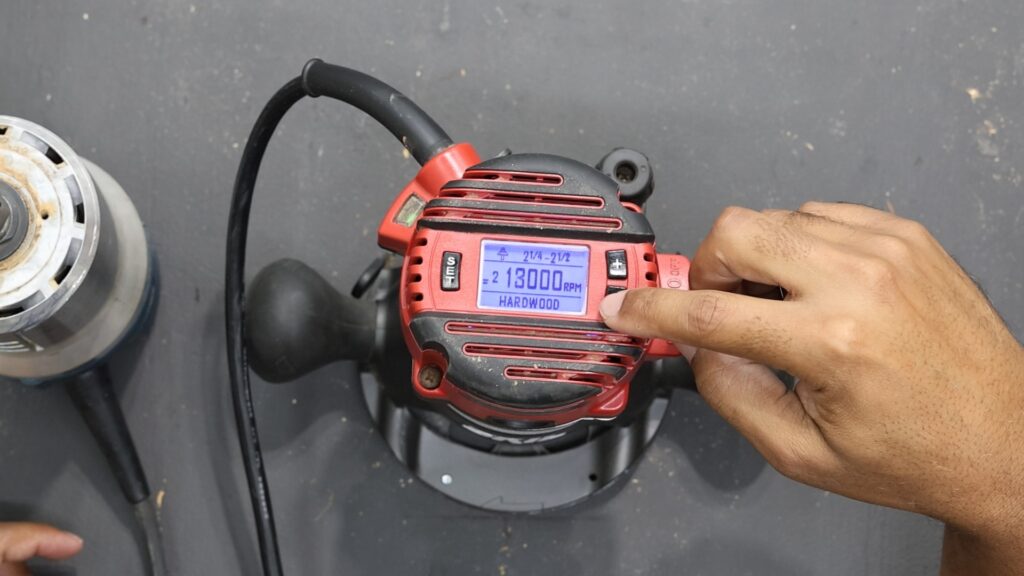
Winner: SKIL for innovation and guidance, DeWalt/Bosch for simplicity and speed
Buy the SKIL for smart speed control
Fixed Base Comparison: Three Different Philosophies
SKIL RT1322-00 Fixed Base
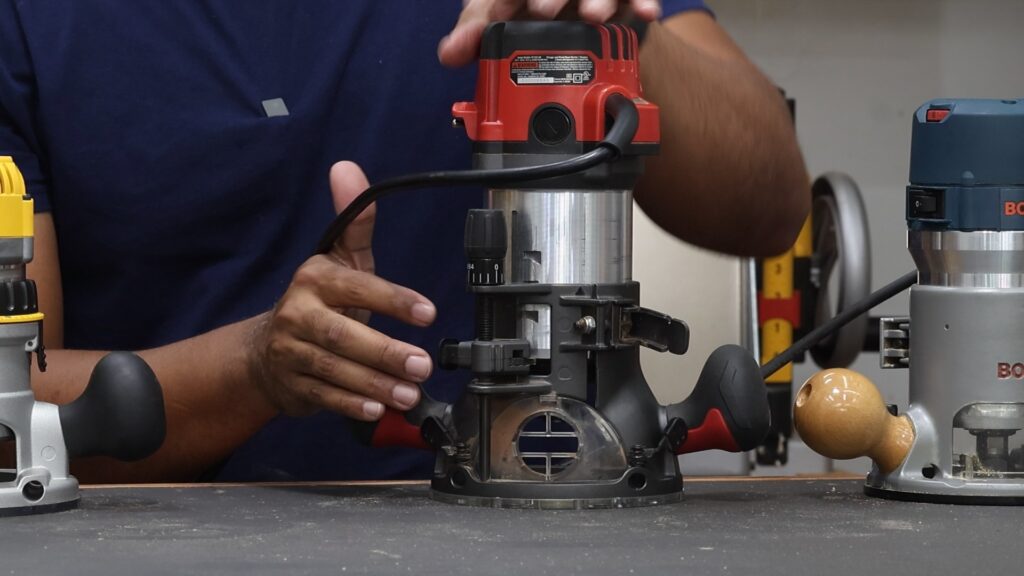
The SKIL uses a traditional macro/micro adjustment system. Press a button to move between notched positions for large adjustments, then turn a dedicated knob for fine-tuning (one full rotation = 1/16 inch). It’s familiar, straightforward, and effective.
The clear sub-base provides excellent bit visibility, and the elongated rubberized handles feel comfortable when routing from a lower position with your elbows down. However, these handles become less comfortable when working from a higher stance with elbows elevated—the pointed profile digs into your palms a bit.
DeWalt DW618PKB Fixed Base
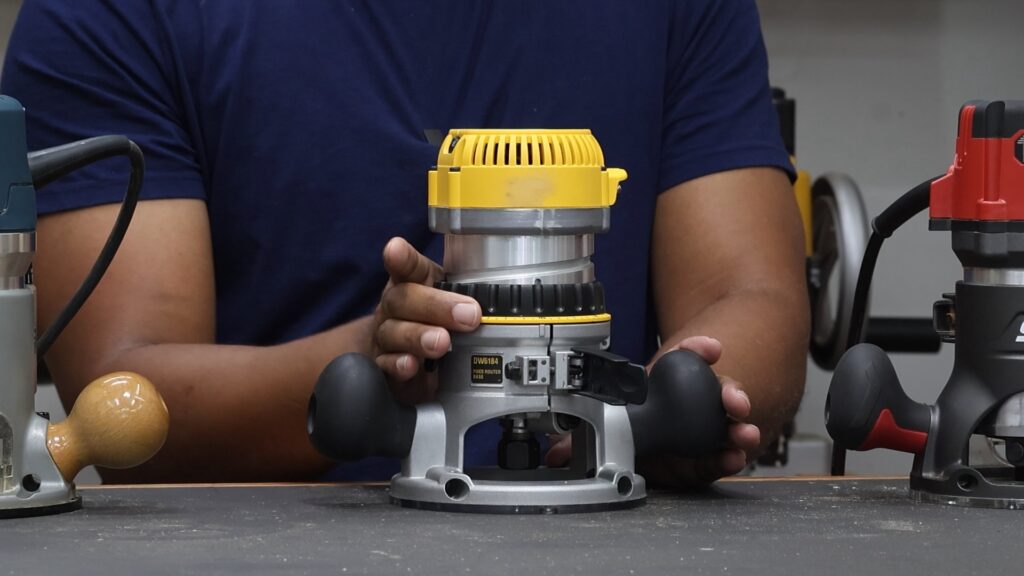
The DeWalt takes a completely different approach with its adjustment ring system. Instead of separate macro and micro controls, everything is adjusted via a ring on the motor housing. One full rotation equals 1/8 inch of travel, with markings every 1/64 inch for precision.
Once you get used to it, the system is intuitive and precise. The downside? For large depth changes, you’re turning that ring a lot since there’s no macro adjustment. Also, the ring must be removed when switching to the plunge base, which gets tedious if you frequently swap bases.
The DeWalt is noticeably more compact than the other two routers, which translates to better balance and a lower center of gravity. The handles are similar to the SKIL—comfortable low, less so when elevated.
Bosch 1617EVSPK Fixed Base
The Bosch also uses a macro/micro system similar to the SKIL: button-release for large adjustments, dedicated knob for fine-tuning (one rotation = 1/16 inch). No surprises, no learning curve.
What sets the Bosch apart are its round, ergonomically shaped handles. Unlike the elongated handles on the SKIL and DeWalt, the Bosch’s round handles feel equally comfortable from any working position—low or high, elbows down or up. During extended routing sessions, this ergonomic advantage becomes increasingly apparent.
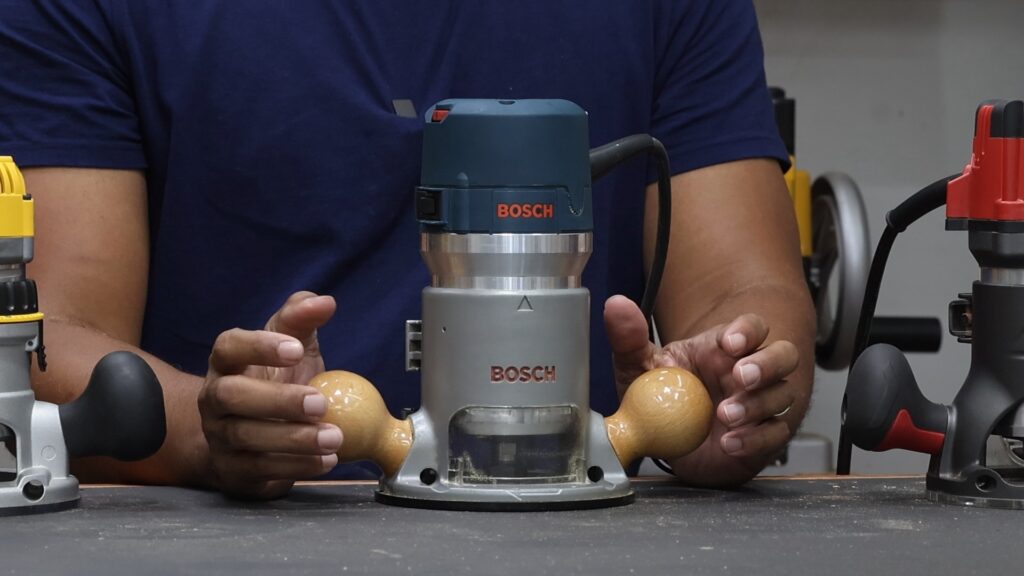
Winner: Bosch for ergonomics, DeWalt for compactness, SKIL for value
Plunge Base Showdown: Where Differences Really Emerge
This is where the three routers diverge most significantly.
SKIL RT1322-00 Plunge Base
The SKIL plunge base uses a flip-up lock lever. Unlock, plunge to depth, lock back down. It’s reliable and straightforward, though not particularly innovative. The plunge action is smooth but not quite as refined as the Bosch.
The turret depth stops feature 1/4 inch increments—adequate for most work. One unique feature: an adjustable upper limit stop that prevents the router from plunging all the way up. I’m honestly not sure when I’d need this, but it’s there.
The handles maintain the same elongated shape as the fixed base—comfortable from low positions, less so when elevated.
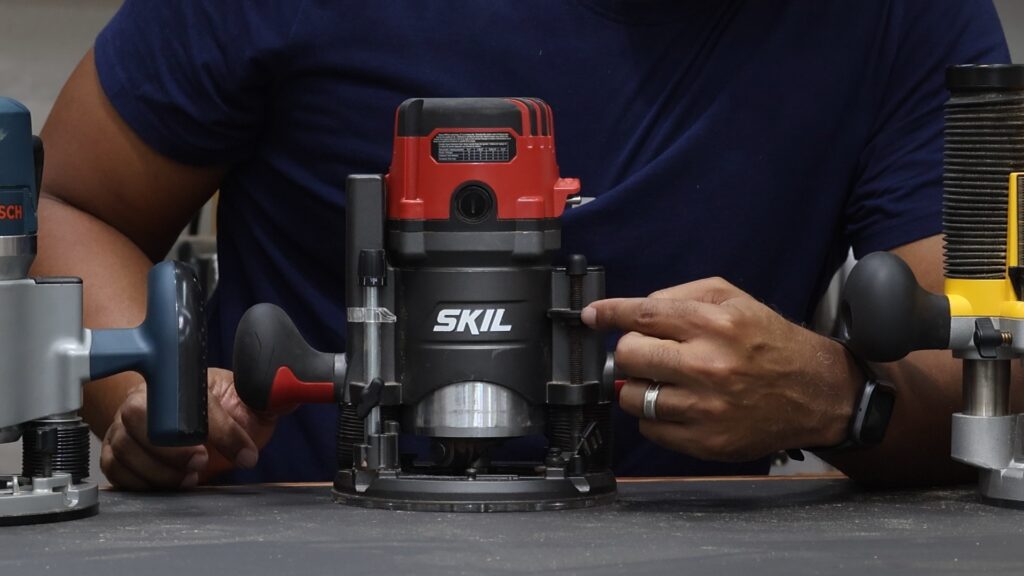
DeWalt DW618PKB Plunge Base
The DeWalt also uses a flip-up lock lever system. The standout feature here is the turret depth stop, which includes 1/4 inch increment stops plus one fully adjustable stop. Neither the SKIL nor Bosch offers this adjustable stop, and it’s genuinely useful for dialing in custom depths.
The plunge action is smooth and reliable, though not as buttery as the Bosch. One design quirk: the through-the-column dust collection system, while innovative, places the speed adjustment dial right up against the dust collection column. This makes speed adjustments awkward and cumbersome—a puzzling oversight on an otherwise well-designed router.
Also, the vertical dust collection snorkel makes the DeWalt the tallest of the three routers when in plunge mode, giving back the compactness advantage it earned with the fixed base.
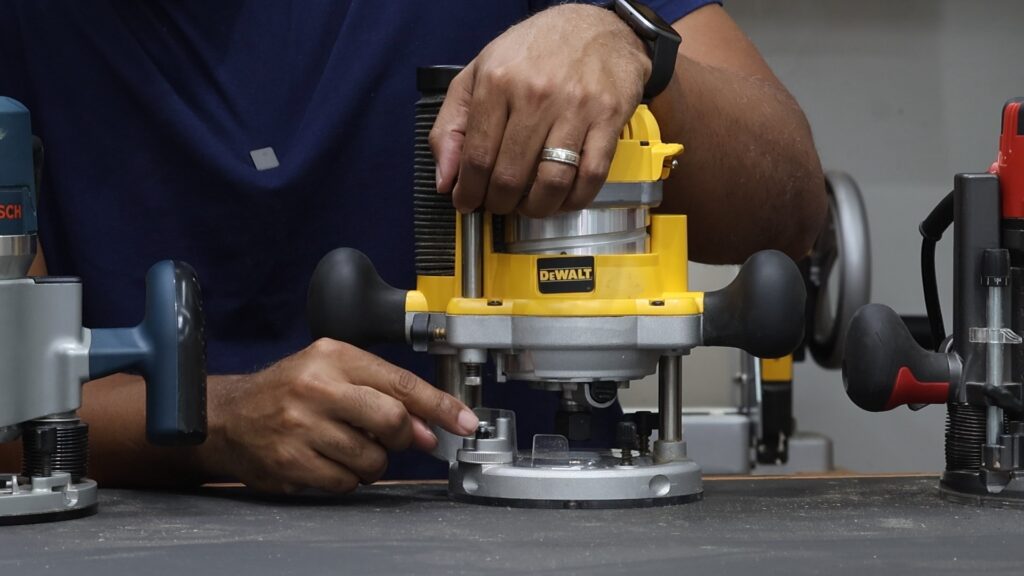
Bosch 1617EVSPK Plunge Base
This is where the Bosch truly shines. The plunge mechanism uses an intuitive squeeze-to-plunge system: grip the handles, squeeze the lever, plunge to depth, release. No flipping locks up and down, no separate lock mechanisms. It’s faster, more intuitive, and allows full control throughout the plunge action.
The plunge action itself is noticeably smoother than either the SKIL or DeWalt—butter-smooth travel that inspires confidence on critical cuts. The precision-machined brass bushings and case-hardened steel guide rods deliver wobble-free performance.
The turret depth stops feature 1/8 inch increments—finer than the DeWalt’s 1/4 inch stops, though not as flexible as having an adjustable stop. For most applications, the 1/8 inch increments strike the right balance.
And the ergonomic handles are comfortable from any working position, reducing fatigue during long plunge routing sessions.
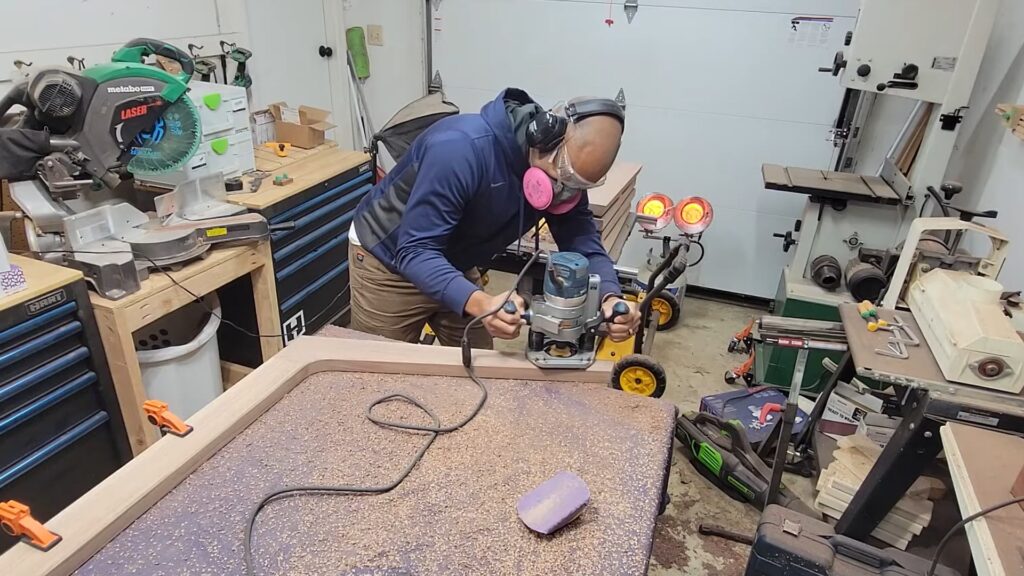
Winner: Bosch, decisively—if plunge routing matters to you, this is the one
Buy the Bosch for superior plunge performance
Bit Changes: Convenience vs. Flexibility
SKIL: Uses a spindle lock button. Press the button, use one wrench to loosen/tighten the collet. Simple, fast, effective.
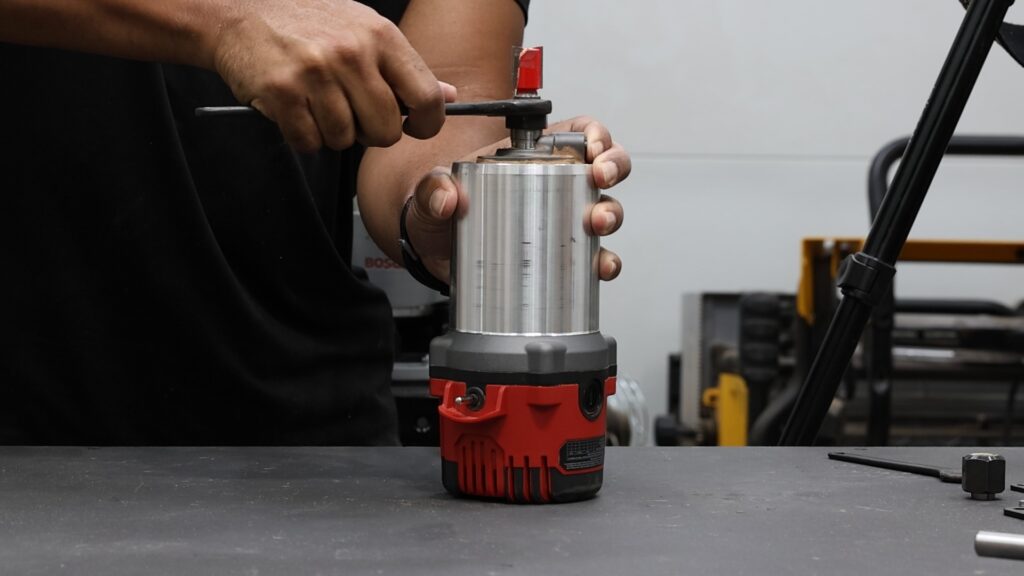
DeWalt: Offers two options—spindle lock button OR two-wrench method using the flat sides of the spindle. Maximum flexibility to work however feels comfortable.
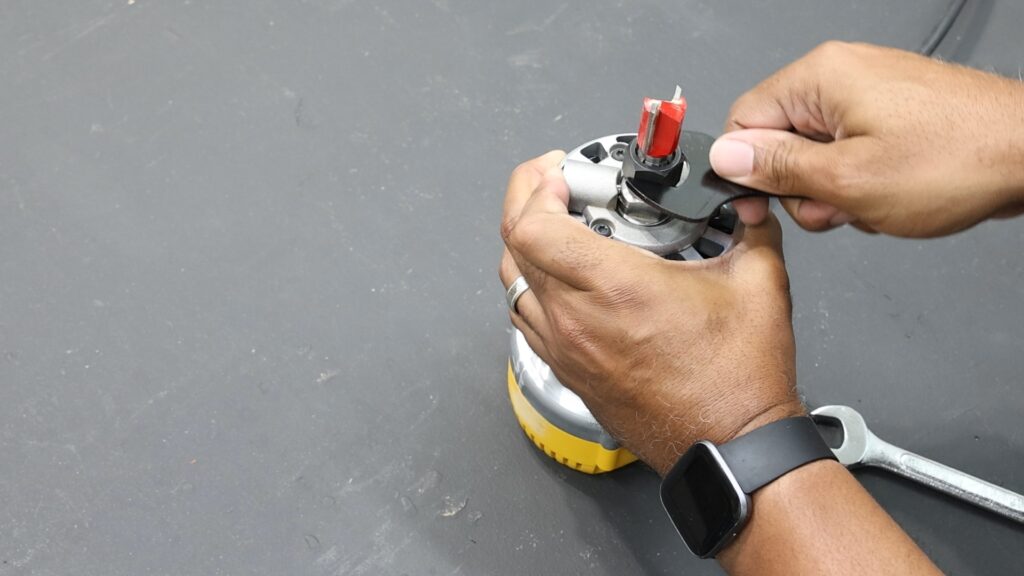
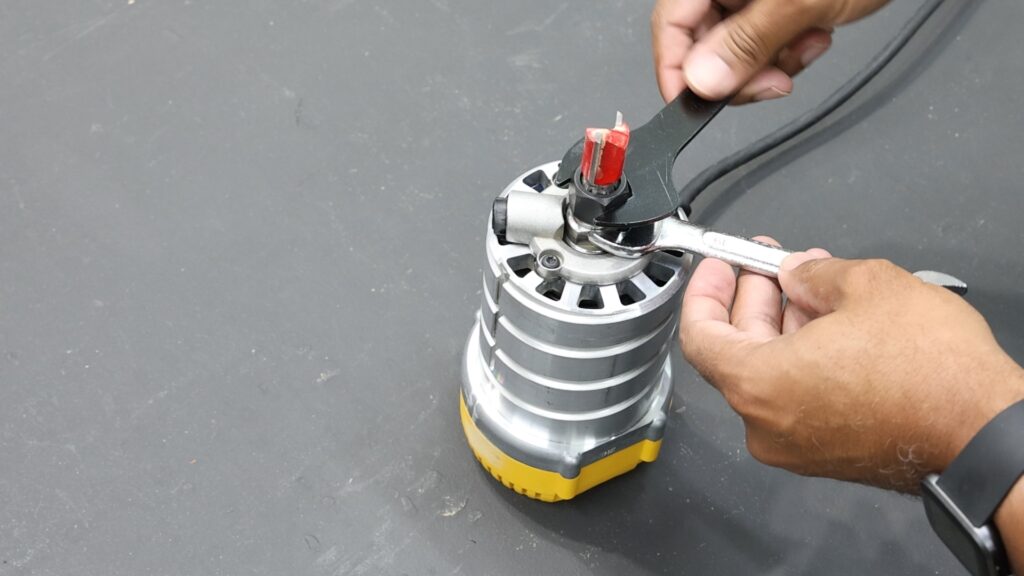
Bosch: Two-wrench method only. Place one wrench on the spindle flats, one on the collet, twist in opposite directions. Not as convenient as a spindle lock, but reliable and becomes second nature with practice.
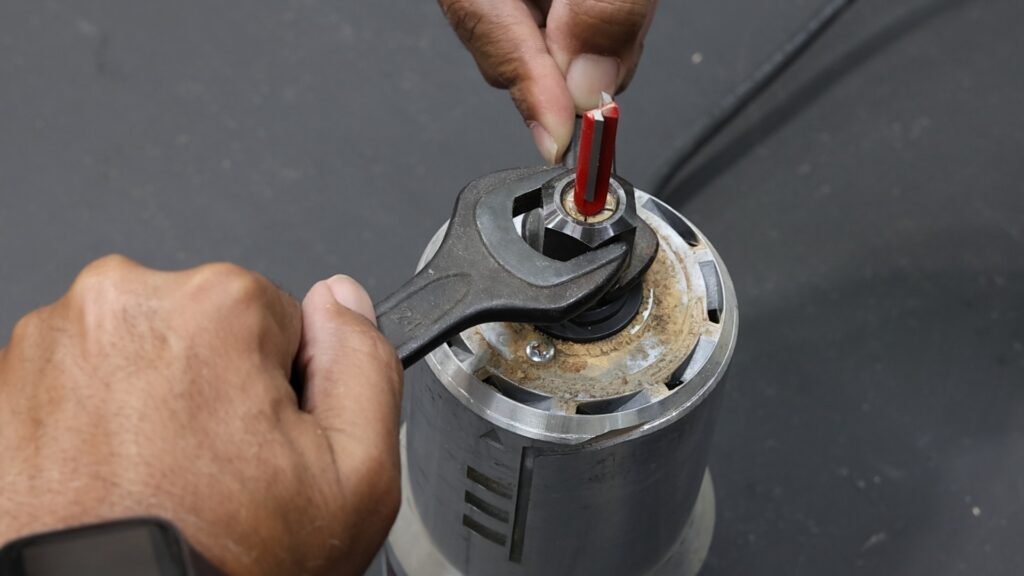
Winner: DeWalt for flexibility, SKIL for convenience
Features & Usability
LED Work Lights
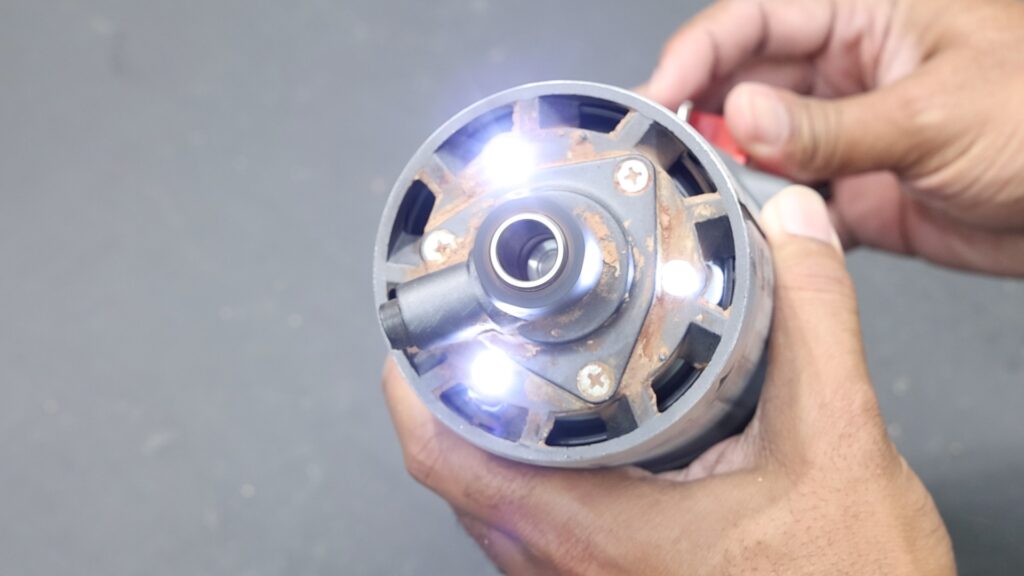
Only the SKIL features built-in LED work lights—three of them, positioned around the motor. They activate only when you power on the router (not just when plugged in), providing useful illumination in dimly lit areas or when the router base casts shadows. It’s not a must-have feature, but it’s a nice touch that makes you wonder why the more expensive routers don’t include them.
Removable Cord
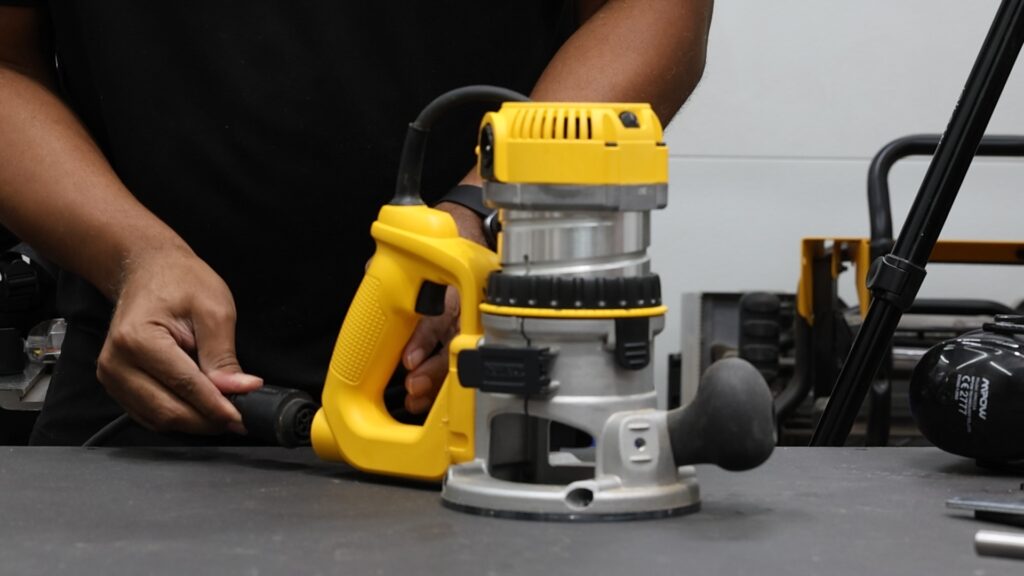
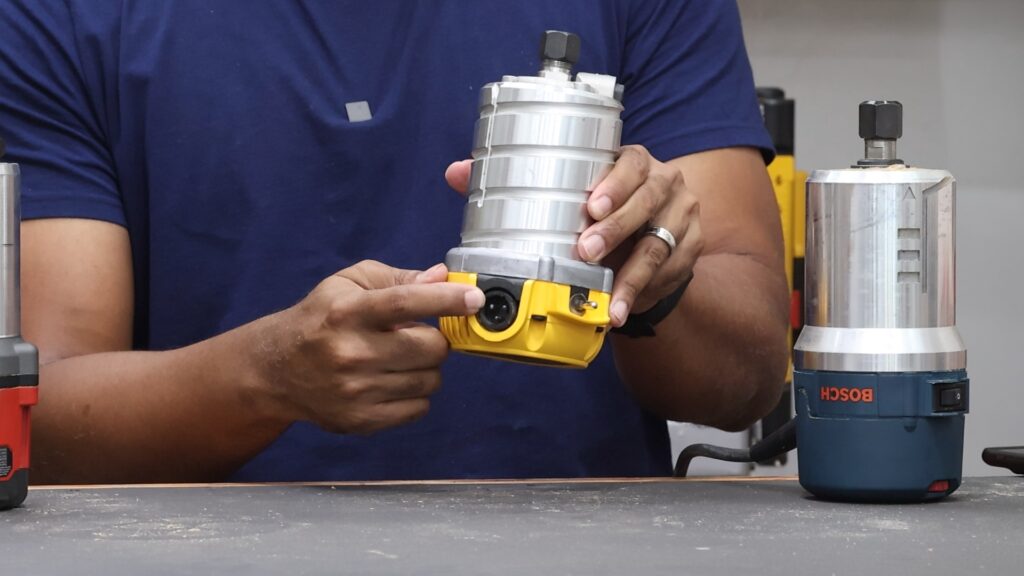
The DeWalt is the only router with a removable power cord. This design accommodates the optional D-handle base (where the cord plugs into the base instead of the motor) and makes storage tidier. If you’re considering the three-base DW618B3 kit or plan to add the D-handle base later, this feature is essential. For everyone else, it’s a nice-to-have.
Cord Length
- SKIL: 6 feet (shortest)
- DeWalt: 8 feet (middle ground)
- Bosch: 10 feet (longest)
The Bosch’s 10-foot cord is genuinely useful in shop environments, reducing the need for extension cords. The SKIL’s 6-foot cord is noticeably short and will likely require an extension cord in most setups.
Power Switches
All three routers feature clearly marked on/off switches with both text and standard symbols. The Bosch adds dust-sealing to its switch for durability. No significant differences here.
Winner: Varied—SKIL for lights, DeWalt for removable cord, Bosch for cord length
Check current pricing on DeWalt DW618PKB
What’s Included: Value Breakdown
SKIL RT1322-00 Includes:
- Router motor
- Fixed base
- Plunge base
- Edge guide (parallel guide)
- 1/4″ and 1/2″ collets
- Collet wrench
- Dust extraction adapters for both bases
- NO carrying case
DeWalt DW618PKB Includes:
- DW618M motor pack
- DW6184 fixed base
- DW6182 plunge base
- 1/4″ and 1/2″ collets
- Collet wrench
- Large-hole sub-base
- Vacuum adapter
- Soft carrying case
- NO edge guide
Bosch 1617EVSPK Includes:
- 1617EVS motor
- RA1161 fixed base
- RA1166 plunge base
- 1/4″ and 1/2″ self-releasing collet chucks
- Fixed and plunge base chip shields
- 16mm and 24mm forged bit change wrenches
- T-handle hex height adjustment wrench
- Hard carrying case with compartments
- NO edge guide
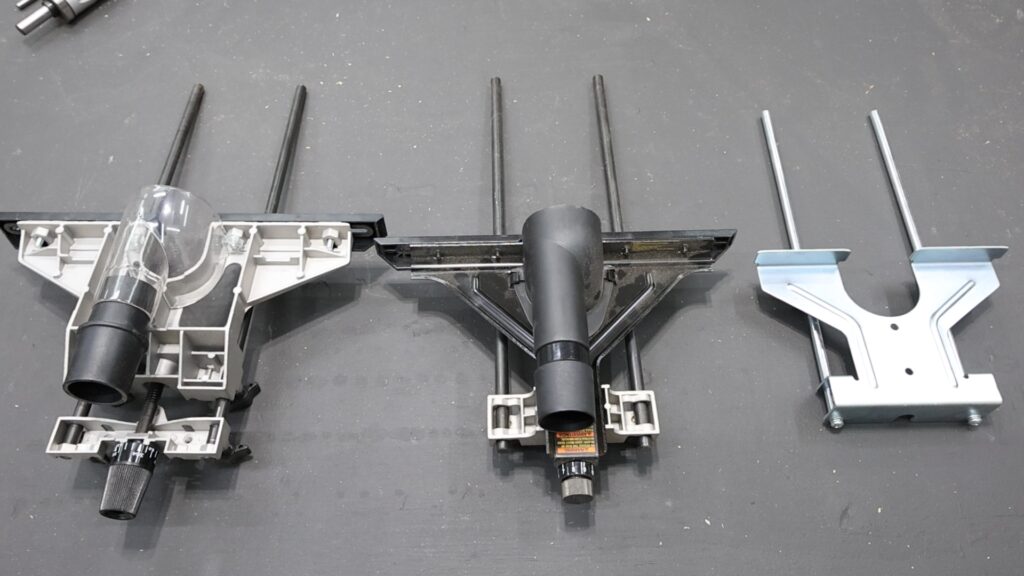
The SKIL is the only router that includes an edge guide, which adds value since aftermarket guides cost $30-50. However, the included guide is basic—functional but not as refined as the aftermarket DeWalt edge guide and the Bosch edge guide (which are compatible with each other but not with the SKIL).
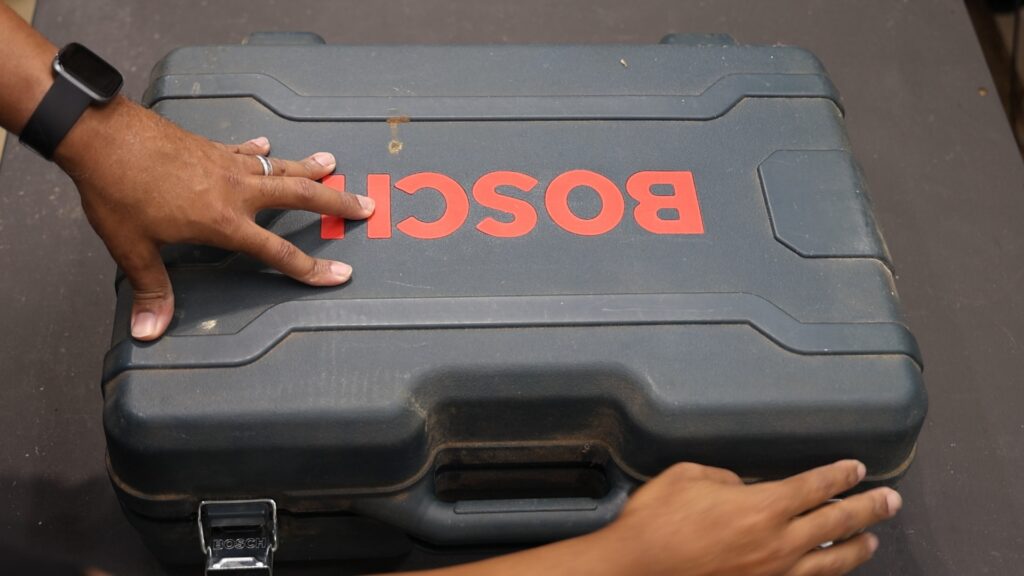
The Bosch’s hard case is a significant value-add for anyone who transports tools or values organized storage. The DeWalt DW618PKB comes with a soft case, which is better than nothing but doesn’t offer much protection (the DeWalt DW618PK comes with a hard case). The SKIL includes no case at all.
Winner: Depends on priorities—SKIL for included edge guide, Bosch for premium case
Performance in Real-World Use
I’ve used all three routers extensively for edge profiling, dado cuts, mortising, template work, and decorative edge treatments. Here’s what stood out:
Router Table Use
All three perform well in a router table, with some differences:
- SKIL: The LCD speed control is slightly more cumbersome to adjust when table-mounted, requiring more deliberate interaction than a simple dial. Otherwise excellent for table use.
- DeWalt: The removable cord is convenient for routing power where needed. The adjustment ring takes getting used to in a table setup but offers excellent precision once you develop a workflow.
- Bosch: Multiple mounting patterns (both 4-hole and 3-hole) fit virtually any table. Above-table height adjustment is genuinely useful. The dial speed control is simple to adjust. Probably the best overall for dedicated table mounting.
Handheld Routing
- SKIL: Plenty of power, good balance, comfortable handles in most positions. The LED lights genuinely help in certain situations.
- DeWalt: The compact profile and low center of gravity provide excellent balance and control. The adjustment ring is intuitive once you get used to it.
- Bosch: The ergonomic handles and smooth plunge action make this the most pleasant to use for extended handheld sessions, especially plunge work.
Edge Work & Template Routing
All three excel at edge work with appropriate bits. For template routing with guide bushings, the Bosch includes a template guide adapter, while the others require aftermarket options.
Winner: All three perform excellently—choose based on your primary use case
Price & Value Analysis: Budget vs Pro Comparison
This is where things get interesting. The SKIL costs about 40% less than the DeWalt and Bosch. That’s a significant savings that could go toward router bits, other tools, or simply staying within budget.
SKIL Value Proposition: More power (2.5 HP), innovative LCD speed control, LED lights, included edge guide, all at the lowest price. You’re getting 90% of the performance for 60% of the cost. For budget-conscious woodworkers or those building a tool collection, this is exceptional value.

DeWalt Value Proposition: Unique features like the removable cord, compact design, dual bit-change options, and the option to add a D-handle base. If those features matter to your workflow, the premium is justified. If not, you’re paying extra for capabilities you won’t use.
Bosch Value Proposition: The most refined overall experience, particularly for plunge routing. The superior plunge base, versatile handles, longest cord, and included hard case appeal to professionals and serious hobbyists who prioritize quality and ergonomics over features and price.
Winner: SKIL for pure dollar value, but the others justify their premiums for specific users
The Verdict: Which Router Kit Should You Buy?
Here’s the truth: there’s no single “best” router among these three. Each excels for different users and applications.
Choose the SKIL RT1322-00 If:
- You’re building a tool collection or working within a budget
- You want the most power (2.5 HP vs 2.25 HP)
- You appreciate innovative features like LCD speed control and LED lights
- You want an edge guide included in the box
- You’re a beginner who’d benefit from smart speed recommendations
- You primarily do fixed-base and general routing work
Best for: Budget-conscious buyers, beginners, feature seekers
Choose the DeWalt DW618PKB If:
- You want the most compact router with the best balance
- You value the removable cord for flexibility and storage
- You’re considering adding a D-handle base now or later
- You appreciate the precision of 1/64″ adjustment markings
- You like having dual bit-change options
- You do primarily fixed-base routing or router table work
Best for: Those wanting compact design, removable cord, or D-handle options
Choose the Bosch 1617EVSPK If:
- Plunge routing is a significant part of your workflow
- You value ergonomics and refined feel over features
- You want the smoothest, most intuitive plunge mechanism
- You do extended routing sessions where handle comfort matters
- You transport your tools and want a quality hard case
- You’re a professional or serious hobbyist who appreciates quality tools
Best for: Plunge routing enthusiasts, professionals, ergonomics-focused users
Final Thoughts
After extensive testing, I can confidently recommend any of these three routers—they’re all excellent tools that will serve you well for years. The choice comes down to your specific needs, budget, and priorities.
If you forced me to pick just one? For most woodworkers, the SKIL RT1322-00 offers the best overall value. You’re getting more power, innovative features, and excellent performance at a price point that won’t break the bank. The money you save versus the premium routers can go toward quality router bits, which often matter more than the router itself.
That said, if plunge routing is your primary focus, the Bosch 1617EVSPK is worth every penny of its premium. The superior plunge base alone justifies the extra cost for woodworkers who do significant mortising, template work, or stopped cuts.
And if you value unique features like a removable cord and compact design—or if you’re considering a D-handle base—the DeWalt DW618PKB brings capabilities the others simply don’t offer.
You can’t go wrong with any of these routers. Choose based on your priorities, and you’ll have a reliable tool that delivers professional results for decades.
Frequently Asked Questions
Q: Which router has the most power? The SKIL RT1322-00 with 2.5 HP and 14 amps. The DeWalt and Bosch both have 2.25 HP and 12 amps. In practical use, all three have plenty of power for typical routing operations.
Q: Which router is best for plunge routing? The Bosch 1617EVSPK, without question. The squeeze-to-plunge mechanism and butter-smooth action make it noticeably superior for plunge work.
Q: Can I use the same edge guide on all three routers? No. The DeWalt and Bosch edge guides are compatible with each other, but neither fits the SKIL. The SKIL includes its own edge guide in the box.
Q: Which router is most compact? The DeWalt DW618PKB has the most compact fixed base. However, its plunge base with the dust collection snorkel is actually the tallest of the three.
Q: Is the SKIL’s LCD speed control gimmicky or genuinely useful? It’s genuinely useful, especially for beginners or when working with unfamiliar bits/materials. Experienced woodworkers may prefer the speed of a traditional dial, but the recommendations are solid and take the guesswork out of speed selection.
Q: Do all three routers work in router tables? Yes, all three work well in router tables. The Bosch has the most flexible mounting options with both 4-hole and 3-hole patterns, plus above-table height adjustment.
Q: Which router offers the best value? The SKIL RT1322-00 at approximately $100 less than the competition while offering more power and innovative features. However, “best value” depends on your priorities—if plunge performance matters most, the Bosch’s premium is justified.
For detailed individual reviews, check out: