
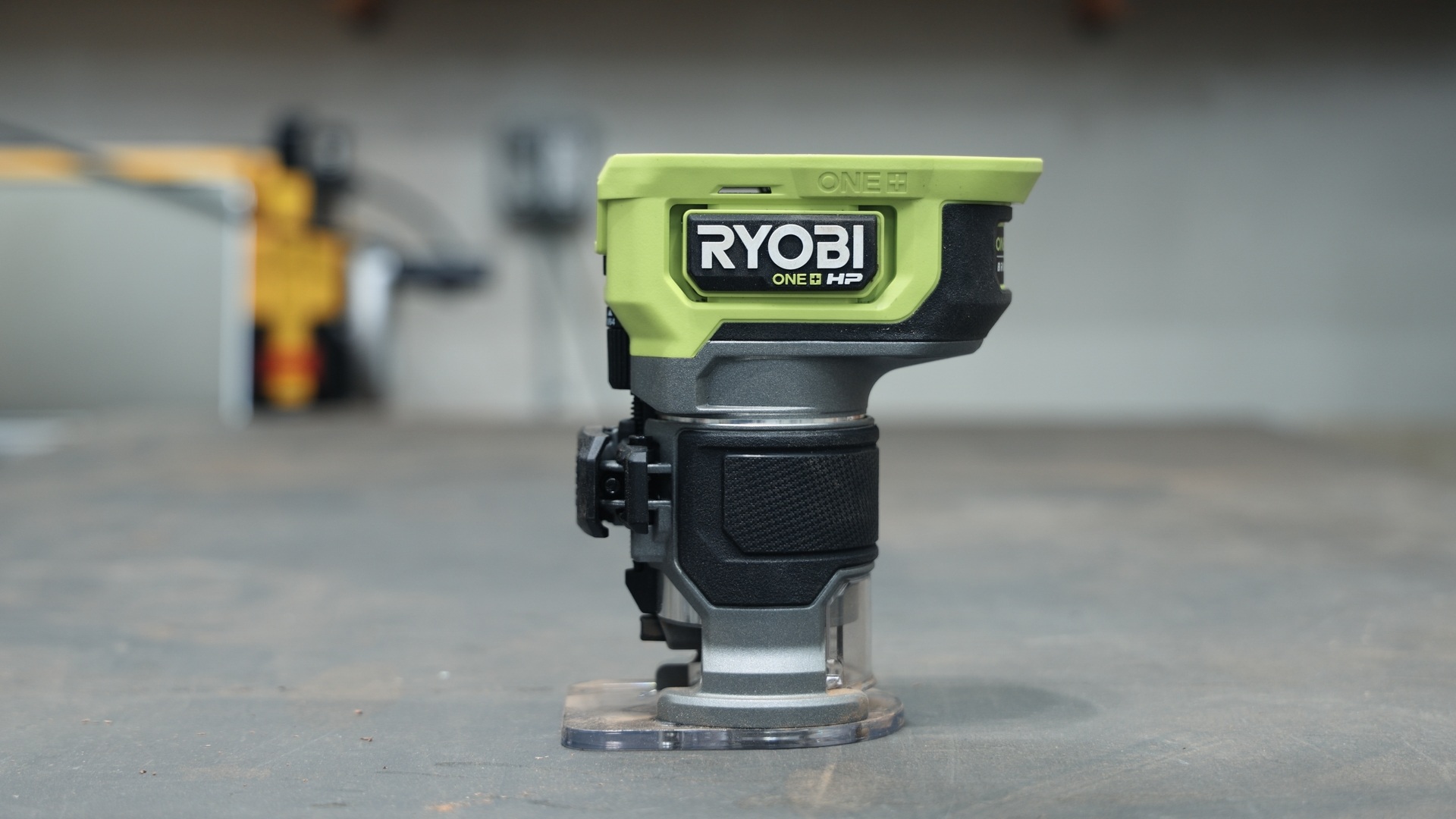
The Ryobi ONE+ HP PBLRR01B represents Ryobi’s entry into the brushless cordless router market. At $129, it’s the cheapest option when compared to all of the major players in the cordless router space. But can a budget-priced router with a 2ah battery deliver enough performance for real woodworking? After extensive hands-on testing including aggressive power tests in hardwood, I’ll help you decide if the Ryobi ONE+ HP router offers enough value at its low price point.
Ryobi ONE+ HP PBLRR01B: At a Glance
Best For: Budget-conscious buyers, existing Ryobi battery platform users, upgraders from older Ryobi routers
Price (MSRP): $129 (tool only), but may be able to be purchased for less
Bottom Line: The Ryobi ONE+ HP PBLRR01B is an affordable brushless cordless router with variable speed at $129. It includes useful accessories (edge guide and dust chute) and modern features like a brushless motor. However, performance significantly lags behind competitors, especially when it comes to power if you aren’t sizing up on your batteries.
👉 Check current price on the Ryobi PBLRR01B here
Ryobi ONE+ HP PBLRR01B Specifications
Understanding Ryobi ONE+ HP
The “HP” designation stands for “High Performance” and represents Ryobi’s brushless tool line. This is a significant upgrade from Ryobi’s older brushed motor routers. The brushless motor and variable speed are why I included this router in the comparison—without those features, it couldn’t legitimately compete with the other routers tested.
If you own an older Ryobi 18V router without brushless or variable speed, the PBLRR01B is a worthy upgrade within the Ryobi platform.
What’s in the Box?
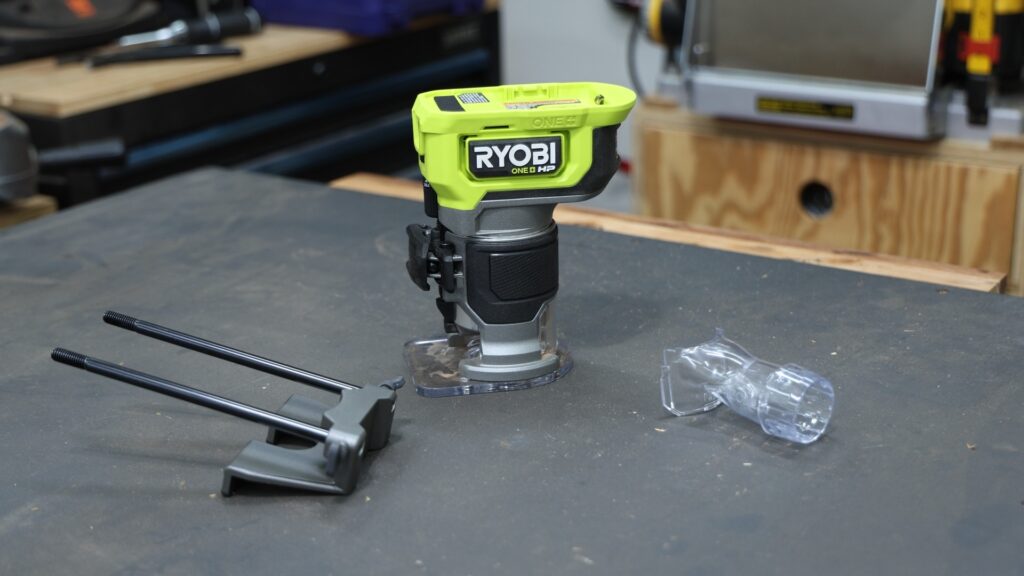
For $129, Ryobi provides a reasonable accessory package:
- PBLRR01B router (tool only)
- Edge guide
- Dust chute
- D-shaped base (installed backwards—more on this shortly)
- 1/4″ collet wrench
The included accessories match what Ridgid provides at $179. You get what you actually need for basic routing tasks. No complaints here given the price point.
Design & Ergonomics
At 3lb 1oz without battery, the Ryobi sits in the middle of the weight range. The size and design reveal budget-oriented choices throughout.
Grip Design
The barrel is relatively small, which may suit people with smaller hands. However, Ryobi’s battery shape creates an overhang at the top of the router that can crowd your hand when gripping. It’s not a dealbreaker, but it’s less comfortable than competitors with better-integrated battery designs.
The rubber grip is adequate but not as substantial or well-textured as the Ridgid’s best-in-class grip or Milwaukee’s premium feel.
The Backwards Base
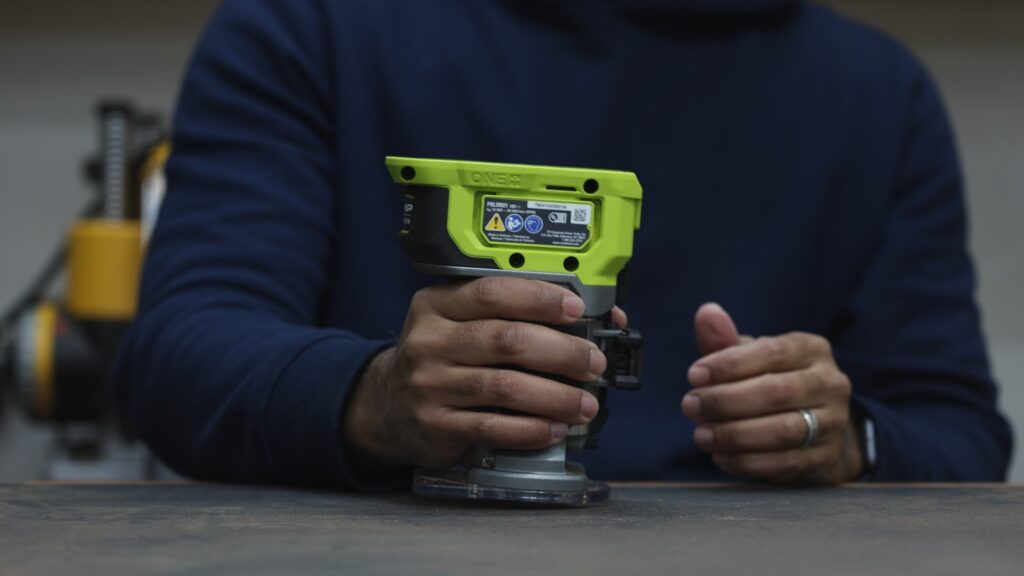
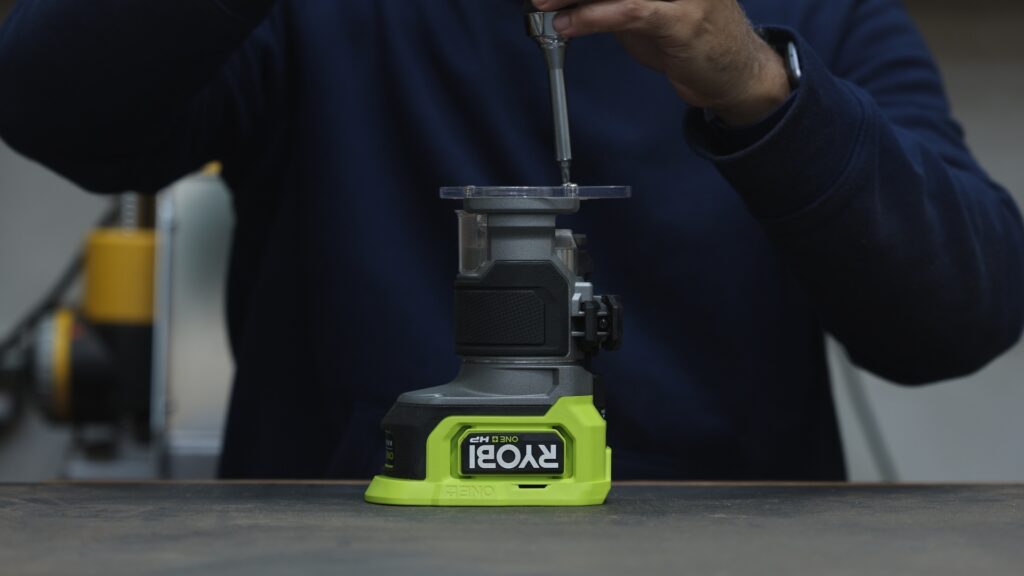
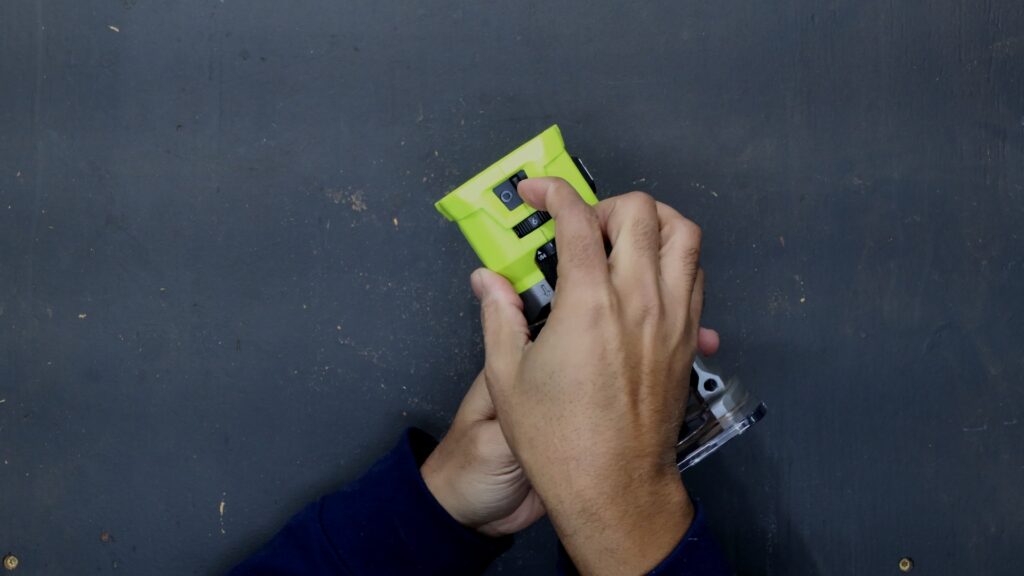
Like its TTI Group sibling Ridgid, the D-shaped base comes installed backwards from the factory. The square edge should be opposite your grip to provide stability and finger placement, but Ryobi ships it on the same side as your grip.
Grab a screwdriver and flip it around immediately when you unbox it. It takes 30 seconds and makes the base function as intended.
Power Switch
The slide-style power switch requires deliberate effort to engage. It’s not a push button or toggle—you have to slide it with purpose. While there’s no dedicated mechanism to prevent accidental starts, the switch design makes accidental activation unlikely. I don’t see it turning on in your bag by accident.
The Adjustment System: Budget Version
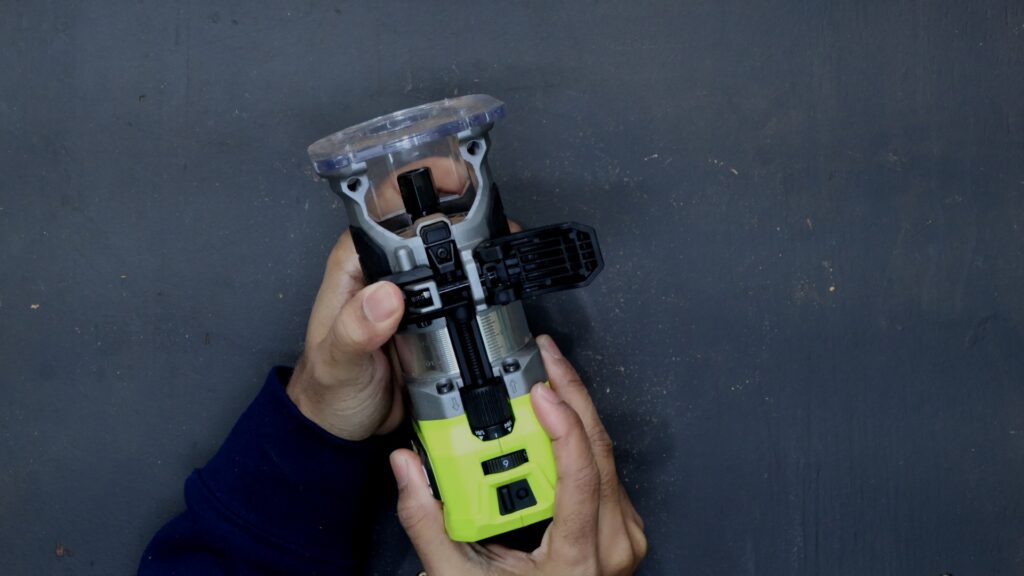
The Ryobi uses a similar adjustment mechanism to Milwaukee and Ridgid (all TTI Group brands), but with budget-oriented compromises.
How It Works
- Unfasten the latch
- For macro adjustments: Push a secondary latch
- For micro adjustments: Turn the dial
- Re-fasten the latch
The Budget Compromises
The latch is plastic instead of metal (Milwaukee and Ridgid use metal). The macro adjustment feels stiffer than its siblings, especially when you get toward the bottom of the adjustment range. The micro adjustment dial also feels less refined.
At this price point, these compromises are expected and acceptable. You’ll get used to it, though it’s noticeably less smooth than Milwaukee’s $199 version.
Power & Performance: The Significant Weakness
The Power Test
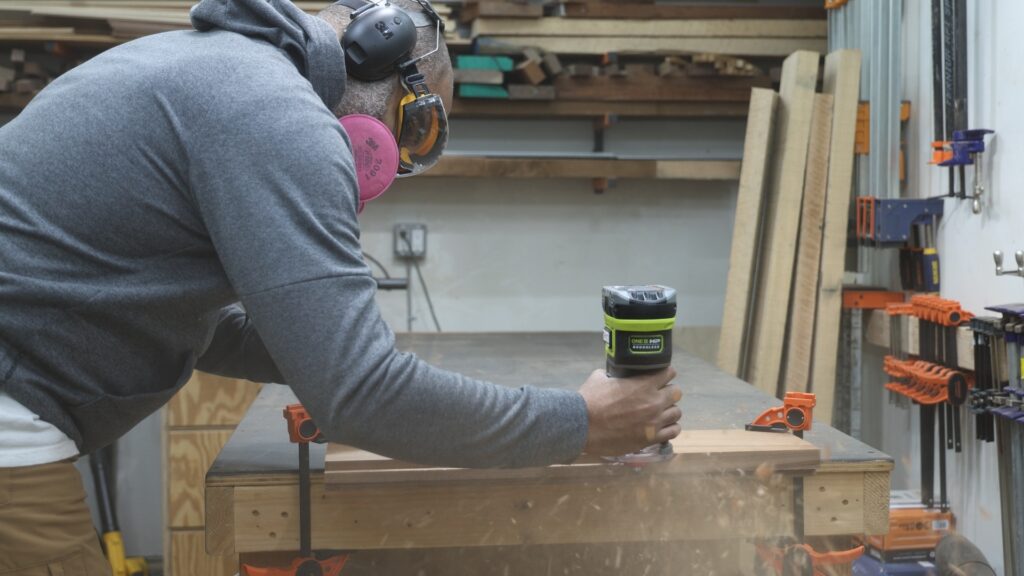
I stressed-tested all routers by routing a 1/2″ × 1/2″ rabbet in 2 feet of dense sapele hardwood.
Ryobi PBLRR01B Result: 38 seconds with three shutdowns (2ah battery)
This is significantly slower than all competitors. For context:
- Bosch: 10 seconds (4ah battery)
- DeWalt: 10 seconds (5ah battery)
- Flex: 11 seconds (2.5ah battery)
- Milwaukee: 13 seconds (2ah battery)
- Ridgid: 13 seconds (4ah battery)
- Metabo HPT: 13 seconds
- Makita: 21 seconds (2ah battery)
- Ryobi: 38 seconds (2ah battery)
Critical Context: The Ryobi used a 2ah battery—the same size Milwaukee used. But Milwaukee finished in 13 seconds while Ryobi took 38 seconds. The Milwaukee was three times faster with the same battery capacity. This suggests the Ryobi’s motor simply lacks power, not just battery capacity.
The 2ah battery came with Ryobi’s kit, which reinforces that this router isn’t designed for demanding cuts. A larger battery would likely improve performance somewhat, but it would still lag behind the competitors.
Real-World Performance
The Ryobi ONE+ HP PBLRR01B can handle typical routing tasks, but with limitations:
Edge Profiling: Can complete roundovers and chamfers in hardwood, but requires slower feed rates and more passes than competitors. Aggressive feeding will bog down the motor or trigger thermal shutdowns.
Template Routing: Works for template routing with patience. The D-shaped base (once properly installed) provides reasonable stability.
Dado Cuts: Can handle shallow dados with multiple passes. Don’t expect to hog out material quickly—this router rewards patience, not speed.
The variable speed control (15,000 – 30,000 RPM) provides adequate range, though the actual cutting performance doesn’t match routers with similar RPM ranges.
Ryobi ONE+ HP PBLRR01B vs the Competition
Ryobi ONE+ HP PBLRR01B vs Ridgid R860444B
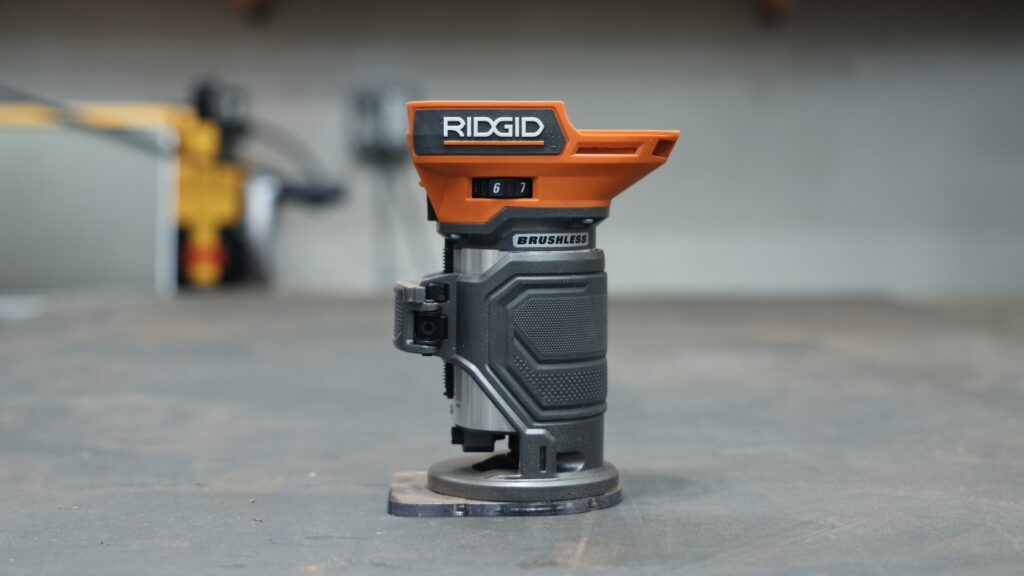
These are TTI Group siblings at different price points.
Where Ryobi Wins:
- Price: $129 vs $179—$50 cheaper
Where Ridgid Wins:
- Performance: 13 seconds vs 38 seconds—nearly 3x faster (though with a bigger battery)
- Build Quality: Metal components vs more plastic
- Adjustment: Less stiff, more refined mechanism
- Grip Ergonomics: Better overall comfort
- Feel: More substantial and professional
Verdict: The $50 difference is absolutely worth it if you can afford it. The Ridgid is dramatically faster and feels like a professional tool. The Ryobi works, but the performance gap is significant.
Ryobi ONE+ HP PBLRR01B vs Metabo HPT M1808DAQ4
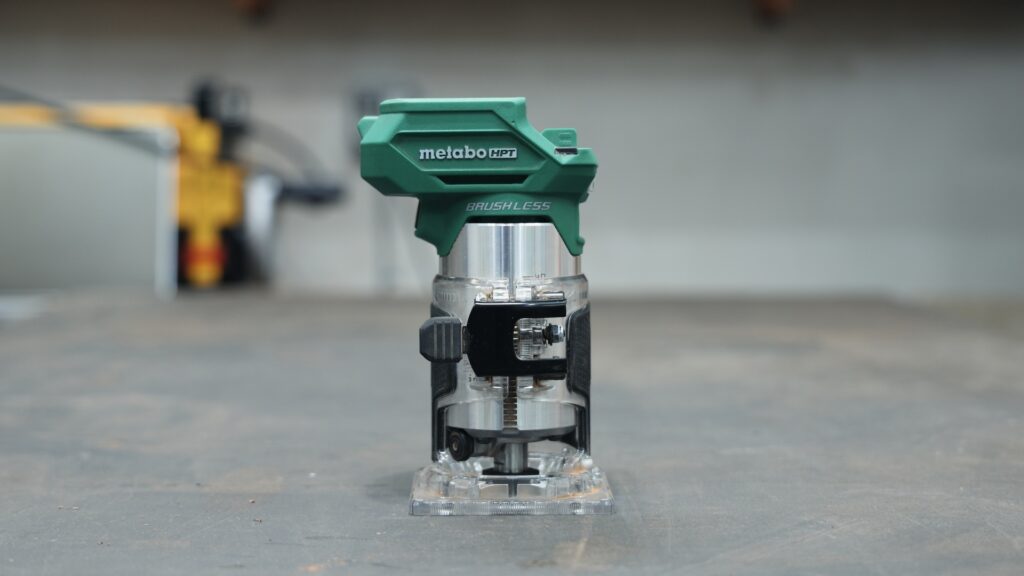
Where Ryobi Wins:
- Price: $129 vs $149—$20 cheaper
- Base Material: Not plastic (though still budget-tier)
Where Metabo Wins:
- Performance: 13 seconds vs 38 seconds—nearly 3x faster (though with a bigger battery)
- Weight: 2lb 9oz vs 3lb 1oz—lighter
- One-Handed Operation: Unique advantage for repetitive work
- Build Quality: More solid despite plastic base
Verdict: The Metabo costs $20 more but delivers dramatically better performance. Unless $129 is your absolute maximum budget, the Metabo is worth the upgrade.
Ryobi ONE+ HP PBLRR01B vs Milwaukee 2723-20
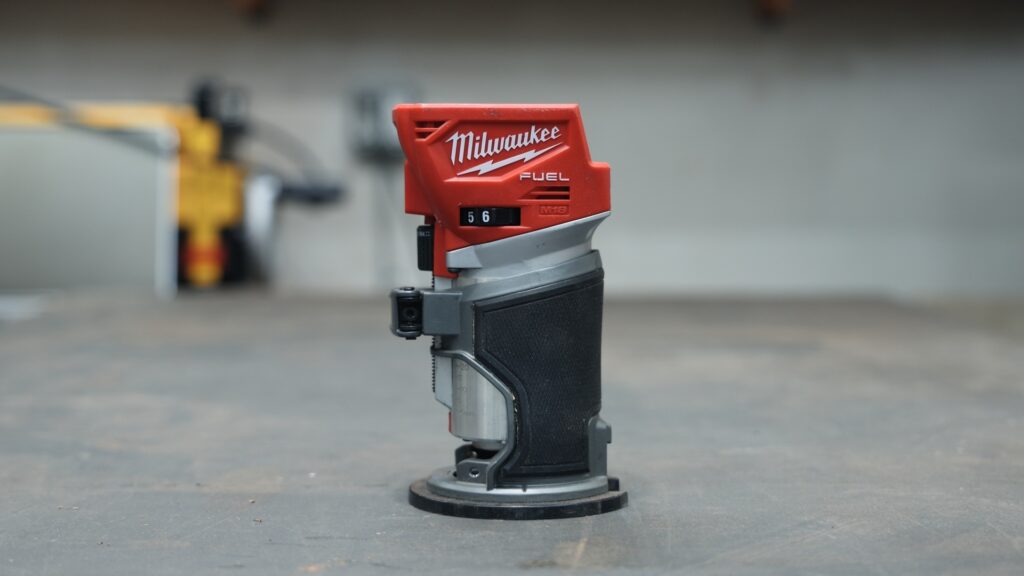
Where Ryobi Wins:
- Price: $129 vs $199—$70 cheaper
Where Milwaukee Wins:
- Performance: 13 seconds vs 38 seconds with the same 2ah battery—3x faster
- Build Quality: Significantly more premium throughout
- Adjustment: Much more refined mechanism
- Ergonomics: Better grip design
- Accessories: Includes second base
- Feel: Professional-grade tool
Verdict: The Milwaukee costs $70 more but is a dramatically better router. If you’re already in the Ryobi platform and $129 is your budget, the Ryobi works. If you can afford more, the Milwaukee is worth every penny of the difference.
Pros and Cons
Pros
- Lowest price ($129)
- Brushless motor and variable speed (upgrade from older Ryobi routers)
- Includes edge guide and dust chute
- Slide switch design unlikely to activate accidentally
- Adequate for light-duty routing tasks
- Good entry point into cordless routing
Cons
- Significantly underpowered compared to competitors, even with equivalent 2Ah batteries
- Stiffer adjustments than premium options
- Small barrel with hand crowding from battery overhang
- Base installed backwards from factory
- No plunge base available
Who Should Buy the Ryobi ONE+ HP PBLRR01B?
You’ll Love This Router If:
- Budget is your primary constraint – $129 vs $179+ is a meaningful difference
- You’re locked into Ryobi batteries – Makes sense if you own multiple Ryobi tools
- You’re upgrading from an older Ryobi router – The brushless motor and variable speed are significant improvements
- You do light-duty routing – Occasional edge profiling in softwoods works fine
- You’re a beginner experimenting – Low cost reduces risk while learning
Look Elsewhere If:
- You work with hardwoods regularly – The power limitations will frustrate you, especially with smaller batteries
- You’re not locked into Ryobi – Better options exist for $20-50 more
- You want a long-term solution – You’ll likely upgrade within a year or two
See How It Compares
I tested the Ryobi alongside seven competing routers in a full head-to-head video. You can watch that comparison here: