

The Makita XTR01Z cordless trim router is popular despite having some controversial design choices. Makita has a strong reputation for quality tools, but this router has been on the market for several years without significant updates while competitors released newer models with innovative features. At $199, does the Makita still compete with newer routers from Bosch, DeWalt, and Milwaukee? After extensive hands-on testing including aggressive power tests in hardwood, I’ll help you decide if this Makita 18V router is the right choice—especially if you’re already invested in the LXT battery platform.
Makita XTR01Z: At a Glance
Best For: Woodworkers heavily invested in Makita’s 18V LXT battery platform who can accept its quirks or plan to upgrade the base
Price (MSRP): $199 (tool only), but can often be purchased for less
Bottom Line: The Makita XTR01Z features a simple adjustment mechanism that some love for its straightforwardness, but it lacks a spindle brake (inexcusable at this price) and has a base that’s too small with limited bit clearance. At $199 with only an edge guide included, it needs a refresh. If you’re locked into Makita’s extensive LXT platform, it’s functional. If you’re not, better options exist at the same price point.
👉 Check current price on the Makita XTR01Z here
Makita XTR01Z Specifications
What’s in the Box?
For $199, Makita provides a minimal accessory package:
- XTR01Z router (tool only)
- Edge guide
- 1/4″ collet wrench
That’s it. No dust chute, no second base, no additional accessories. At $199, Makita should include more—a second base would be particularly welcome given the small stock base.
Design & Ergonomics
At 3lb 2oz without battery, the Makita sits in the middle of the weight range. The design shows its age compared to some newer competitors.
Grip Design
The grip is adequately sized and comfortable for extended use. It works well for a range of hand sizes and provides good control during routing operations.
Base Design: The Major Limitation
This is where the Makita reveals significant problems:
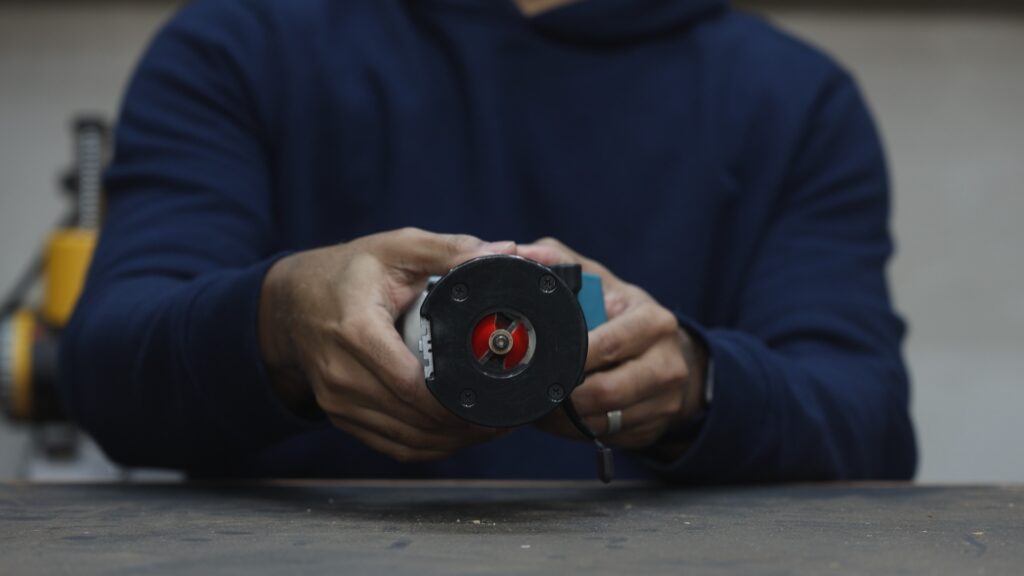
Base Too Small: The base diameter is noticeably smaller than most other routers tested, which hurts stability.
Limited Bit Clearance: The opening in the base is so small that I can’t even fit a chamfer bit through it. This is a genuine limitation that affects which bits you can use with the stock base.
Both issues can be fixed with an aftermarket base, but that’s an additional expense on top of the already-minimal accessory package.
Power Switch
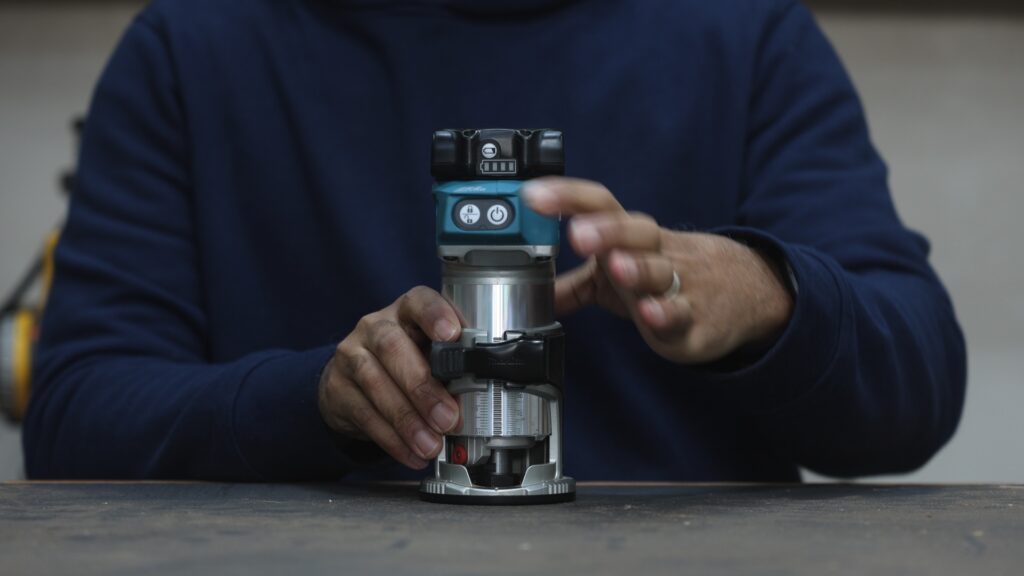
The Makita uses a two-stage power system: you must push the primary power button first, then press the on/off button to start the router. This prevents accidental starts and works similarly to the Metabo HPT’s safety system. It’s effective and easy to understand.
The Adjustment System: Controversial But Simple
The Makita adjustment mechanism is probably the feature people complain about most. But here’s the thing: I actually kind of like it.
How It Works
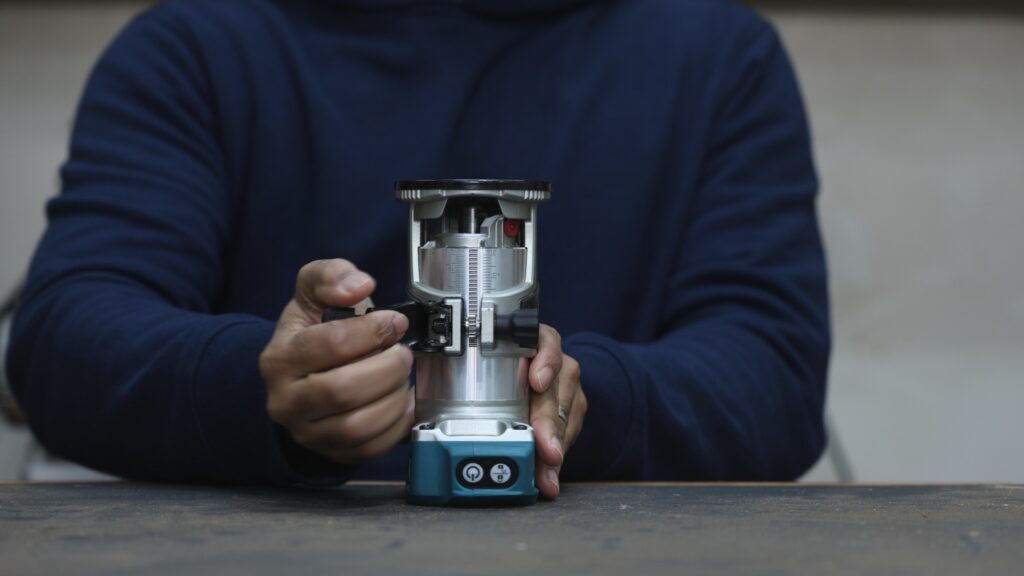
- Unfasten the latch
- Remove the base to change bits or adjust depth
- Re-fasten the latch
That’s it. No “unfasten then push this button,” no “squeeze these tabs,” no “turn it a half inch.” Simple.
The Gravity Problem
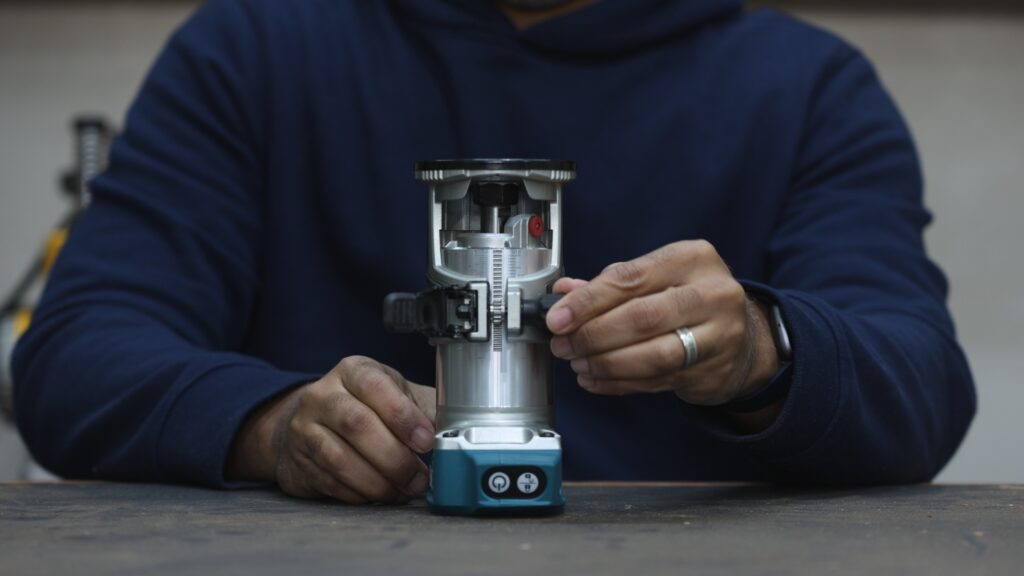
With no secondary locking mechanism, gravity does its thing when you’re setting bit height. The base wants to slide down, so you need two hands to hold it in position while adjusting.
Two Solutions:
- Just use two hands. Honestly, it’s not a big deal. It works fine, even if it’s not elegant.
- The one-handed trick: When unfastening the latch, don’t open it all the way—bring it about a third of the way open. This tightens the base around the motor just enough that it stays in place when you turn the adjustment knob. Now you have one-handed adjustment.
Where It Shines
The simplicity is genuinely nice for base removal and bit changes. There’s no fumbling with multiple mechanisms—just unfasten the latch and lift. For frequent bit changes, this straightforward approach is faster than more complex systems.
The Missing Spindle Brake: Inexcusable
This is the Makita’s most significant flaw: it’s the only router in this comparison without a spindle brake.
A spindle brake stops the bit immediately upon powering off the router. Every other router tested has this feature. It’s a standard safety feature on modern cordless tools in this price range, which makes its absence here inexcusable.
Power & Performance
The Power Test
I stressed-tested all routers by routing a 1/2″ × 1/2″ rabbet in 2 feet of dense sapele hardwood.
Makita XTR01Z Result: 21 seconds with one shutdown (2ah battery)
This is mid-to-lower pack performance. For context:
- Bosch: 10 seconds (4ah battery)
- DeWalt: 10 seconds (5ah battery)
- Flex: 11 seconds (2.5ah battery)
- Milwaukee: 13 seconds (2ah battery)
- Ridgid: 13 seconds (4ah battery)
- Metabo HPT: 13 seconds
- Makita: 21 seconds (2ah battery)
- Ryobi: 38 seconds (2ah battery)
Important Context: The Makita used a 2ah battery. A larger battery would likely improve performance, though I doubt it would close the gap to the top performers, especially given that the Milwaukee recorded a time of just 13 seconds with a 2Ah battery. The Makita is noticeably slower than premium options.

Real-World Performance
The Makita XTR01Z handles typical routing tasks adequately:
Edge Profiling: Can complete roundovers, chamfers, and decorative profiles in hardwood. Though the small included base can be a limitation with some larger profile bits.
Template Routing: Works adequately for template routing.
Dado Cuts: Has sufficient power for dados with measured feed rates and multiple passes.
The variable speed control (10,000 – 30,000 RPM) provides adequate range for different materials and bit sizes.
Makita XTR01Z vs the Competition
Makita XTR01Z vs DeWalt DCW600B
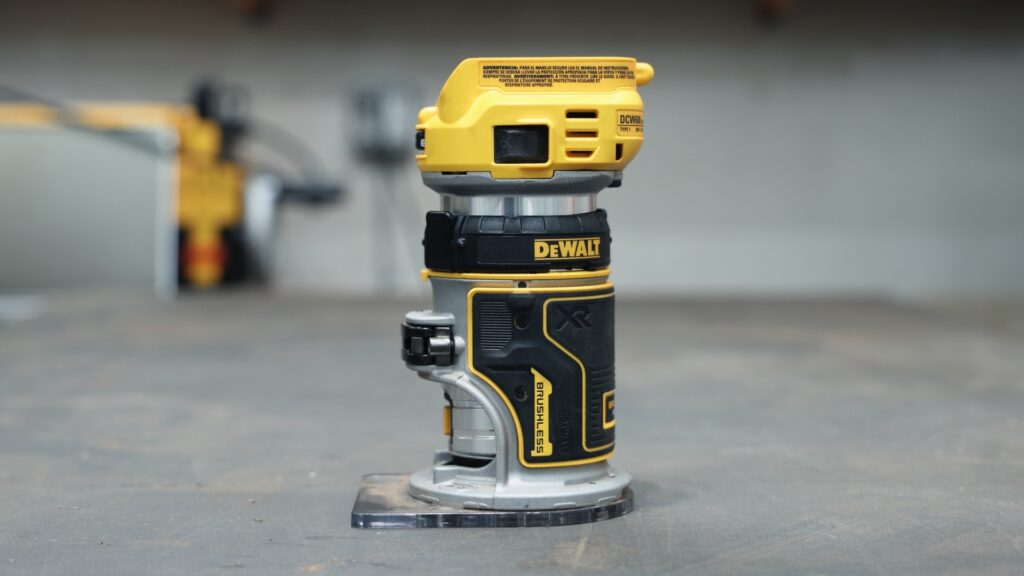
Both are $199 routers from established brands, but they take different approaches.
Where DeWalt Wins:
- Power: 10 seconds vs 21 seconds—significantly faster (although Makita had a smaller battery)
- Adjustment: Single-ring system is simpler and more precise
- Base: Larger D-shaped base with better stability
- Safety: Has spindle brake (Makita doesn’t)
Where Makita Wins:
- Base Removal: Simpler latch-only design for bit changes
- Accessories: Edge guide vs just a wrench (though neither is good)
- Adjustment for Some: Some prefer the simplicity despite gravity issues
Verdict: The DeWalt is faster, has better safety features, and a more refined adjustment system. At the same $199 price, the DeWalt is the better router unless you’re locked into Makita’s battery platform.
Makita XTR01Z vs Milwaukee 2723-20
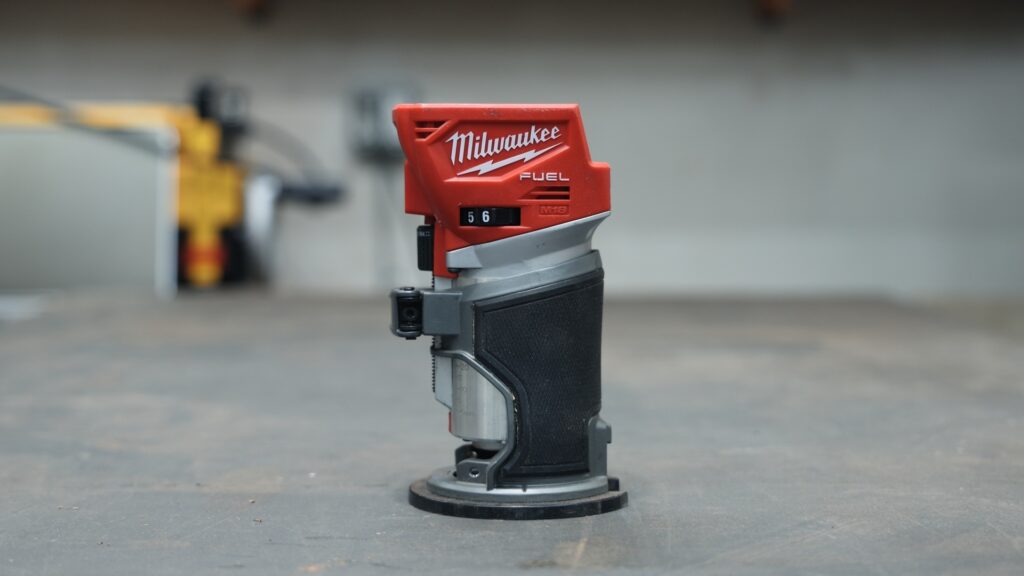
Where Milwaukee Wins:
- Performance: 13 seconds vs 21 seconds (both used 2ah batteries)
- Safety: Has spindle brake (Makita doesn’t)
- Adjustment: More refined traditional mechanism
- Accessories: Includes edge guide, dust chute, AND second base
Where Makita Wins:
- Base Removal: Simpler for frequent bit changes
Verdict: The Milwaukee is significantly better unless you’re locked into Makita batteries. Better performance, better safety, better accessories at the same price.
Makita XTR01Z vs Metabo HPT M1808DAQ4
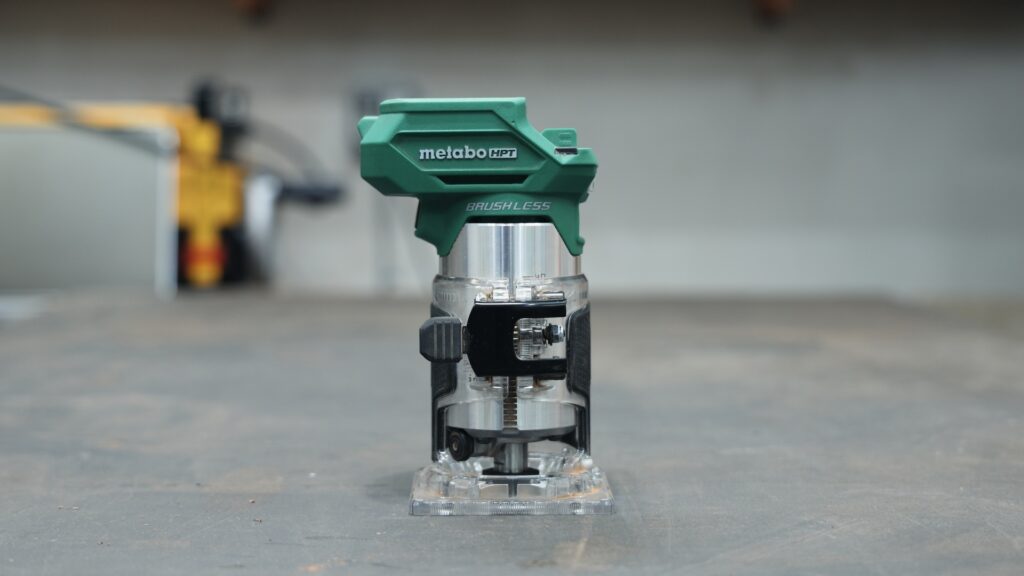
Where Metabo Wins:
- Price: $149 vs $199—$50 cheaper
- Performance: 13 seconds vs 21 seconds—notably faster (although Makita had a smaller battery)
- Weight: 2lb 9oz vs 3lb 2oz—lighter
- One-Handed Operation: Unique advantage
- Safety: Primary power button AND spindle brake (Makita lacks brake)
- Accessories: Better package for less money
Where Makita Wins:
- Base Material: Not plastic
- Battery Platform: More extensive than Metabo HPT
- Plunge Base Available: Expands capabilities (Metabo doesn’t offer one)
Verdict: For most users, the Metabo costs $50 less and performs better, unless you specifically need Makita’s plunge base system, which Metabo doesn’t offer.
Makita XTR01Z vs Bosch GKF18V-25N
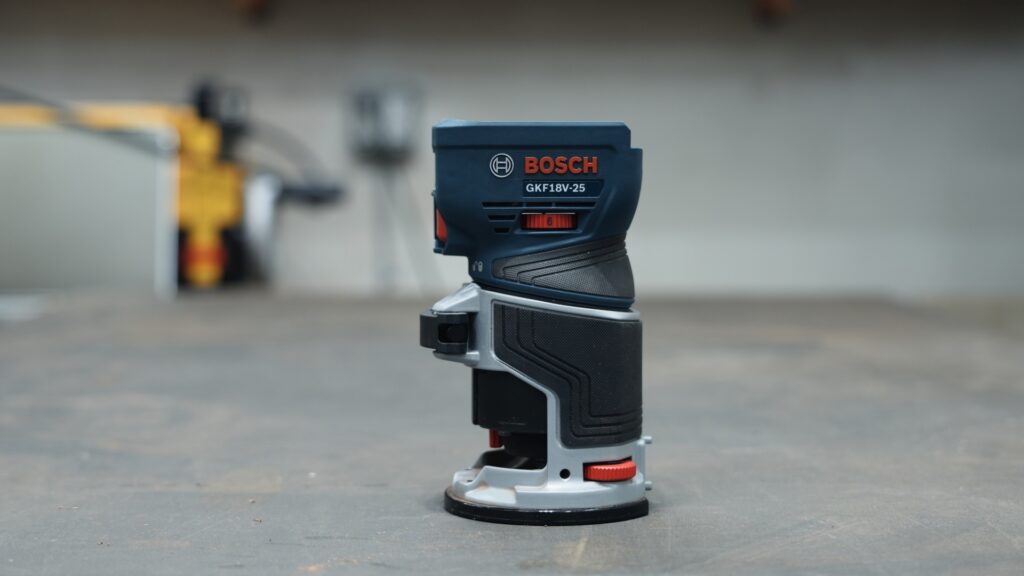
Where Bosch Wins:
- Power: 10 seconds vs 21 seconds (although Makita had a smaller battery)
- Weight: 2lb 8oz vs 3lb 2oz—notably lighter
- Safety: Spindle brake, spindle lock switch, AND drop detection (Makita only has primary power button)
- Accessories: Two dust chutes, chip shield vs just edge guide
- Ergonomics: Molded finger grips and superior design
- Innovation: Represents current state-of-the-art
Where Makita Wins:
- Adjustment Simplicity: Some prefer the straightforward latch-only design
Verdict: The Bosch is superior in virtually every category. The Makita feels outdated in comparison.
Pros and Cons
Pros
- Simple base removal for bit changes
- Primary power button prevents accidental starts
- Plunge base available (sold separately)
- Extensive Makita LXT battery platform
- Solid Makita build quality
- Adequate power for typical routing
Cons
- Only router in the comparison set without a spindle brake (a major safety omission at this price)
- Base too small with limited bit clearance
- Two-hand operation required for depth adjustments
- Minimal accessories ($199 for edge guide only)
- Power lags newer competitors
- Needs refresh with modern features
Who Should Buy the Makita XTR01Z?
You’ll Love This Router If:
- You’re heavily invested in Makita LXT batteries – This is really the most compelling reason
- You value simple base removal – The straightforward latch design is genuinely nice for frequent bit changes
- You plan to upgrade the base anyway – If you’re buying an aftermarket base, the small stock base matters less
- You need Makita’s plunge base system – It’s available for the XTR01Z (unlike Ridgid, Metabo, or Ryobi)
Look Elsewhere If:
- You’re not locked into Makita batteries – Better options exist at the same or lower price
- Safety features matter – Every other router has a spindle brake
- You want good value for accessories – The edge-guide-only package is weak at $199
- You prioritize power – Multiple routers are significantly faster
- You want current technology – This router needs a refresh
See How It Compares
I tested the Makita alongside seven competing routers in a full head-to-head video. You can watch that comparison here: