
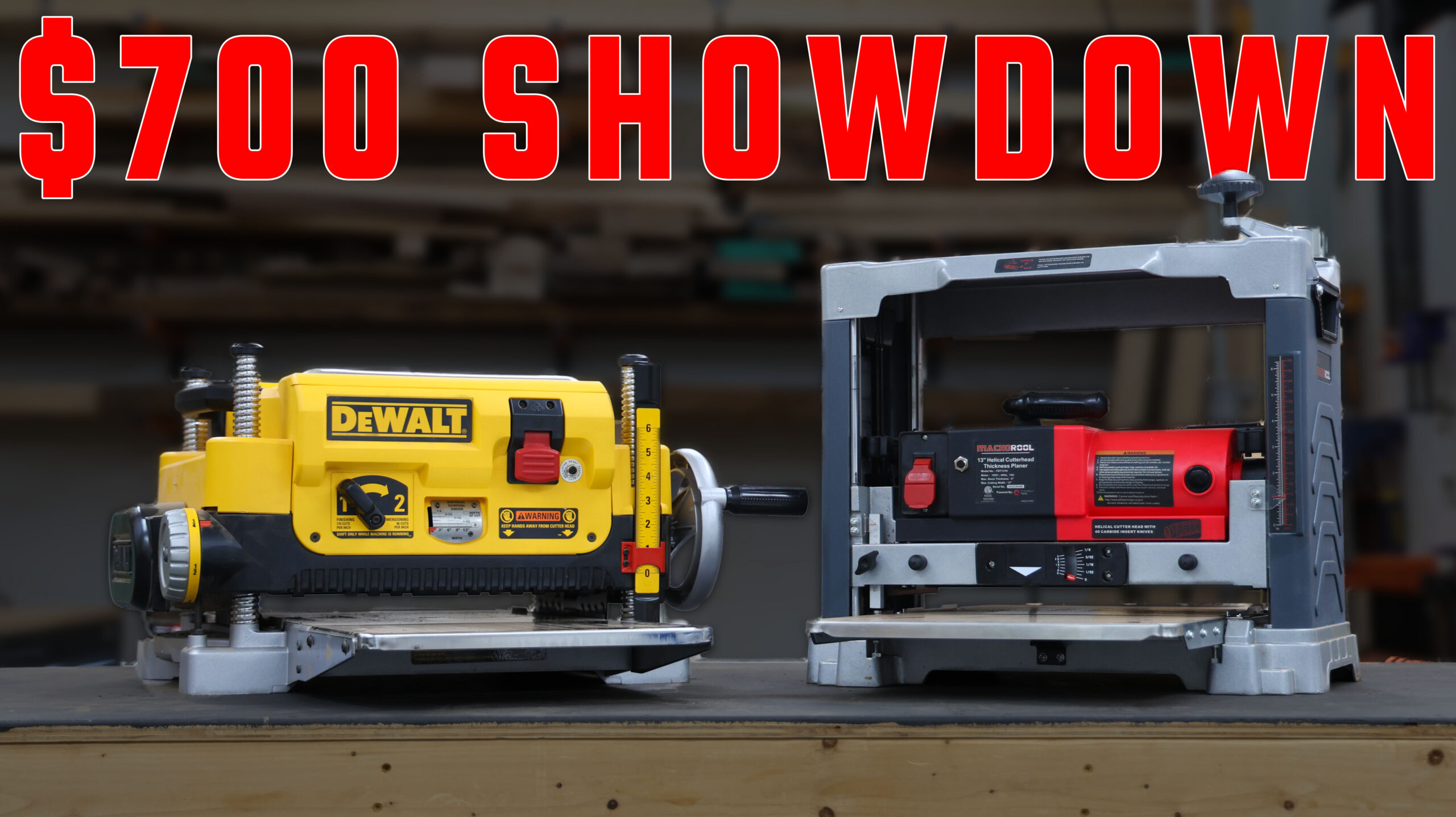
So you’ve got about $700 to spend on a planer, and you’re trying to decide between two completely different approaches: the FindBuyTool FB131H with its helical head, or the tried-and-true DeWalt 735X with straight-knives.
Both planers hit that same price point, but they represent two different philosophies. One gives you cutting-edge helical technology at a budget price, while the other gives you proven reliability with traditional straight-knives. Let me help you figure out which one makes sense for your shop.
FindBuyTool sent me this planer to test, but they had no input on this review and didn’t get to see it before it was published. All opinions are my own.
👉 Check the current prices for both the FindBuyTool FB131H and the DeWalt 735X
Overview: Helical vs. Straight-Knife Tech
Before we dive into the specifics, let’s talk about what you’re actually choosing between.
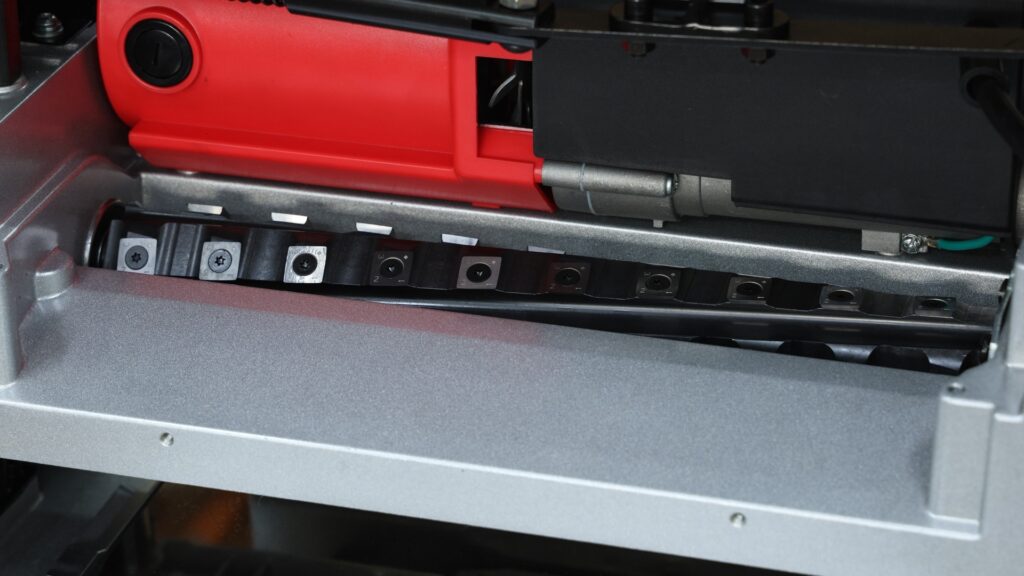
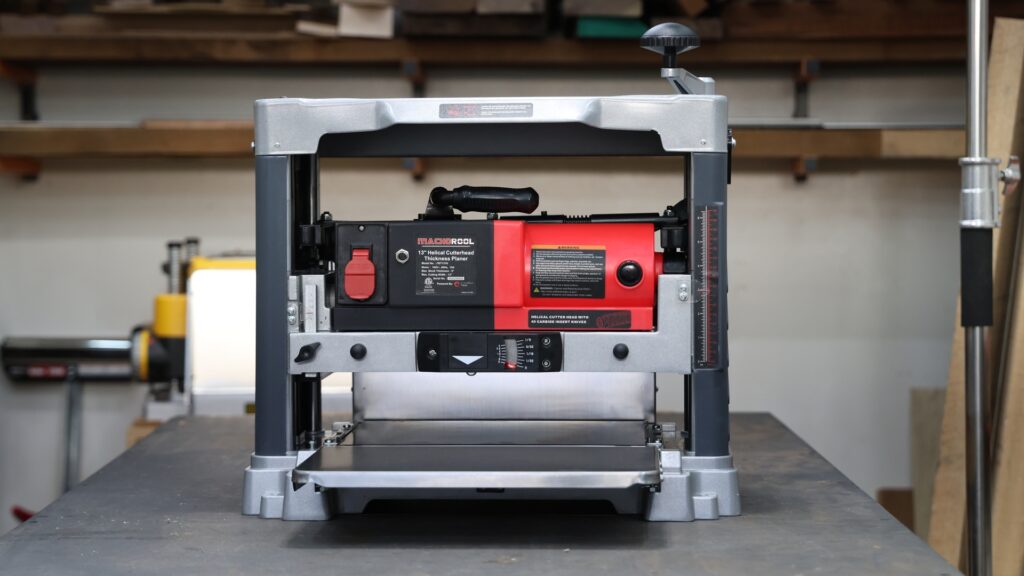
A helical cutter head uses square carbide inserts arranged in a spiral (or helix) pattern around a rotating drum. Unlike traditional straight-knife cutter heads, the inserts on a helical head engage the wood at a slight angle, producing a smoother finish, reducing tear-out, and quieter operation. The FindBuyTool planer uses a four-row helical cutterhead with 40 individual tungsten carbide inserts. Each insert has four cutting edges and can be rotated to a fresh edge when one becomes dull, significantly extending blade life and reducing maintenance costs.
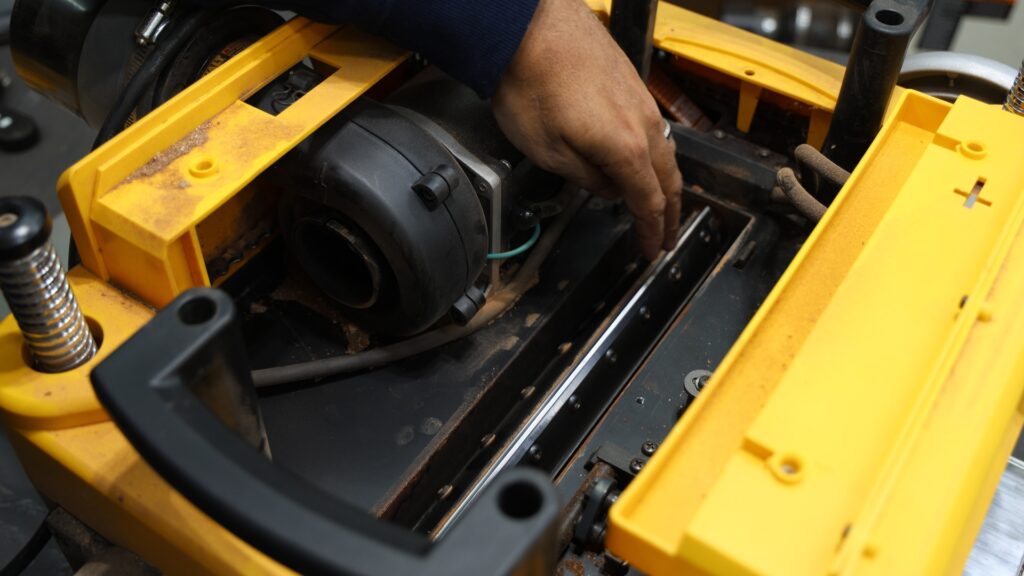
In contrast, straight-knife systems like the one in the DeWalt use three disposable double-sided blades. When one side dulls, you flip the blade; once both sides are used, the entire knife set must be replaced.
According to experts and experienced woodworkers, helical cutter heads can last 30 to 40 times longer than straight-knife systems before requiring replacement.
Curious about just the FindBuyTool planer? 👉 Read my full review of the FB131H here.
Side-by-Side Specs Comparison: FindBuyTool Planer vs DeWalt Planer
Performance Showdown: Cut Quality, Noise, Snipe, Dust
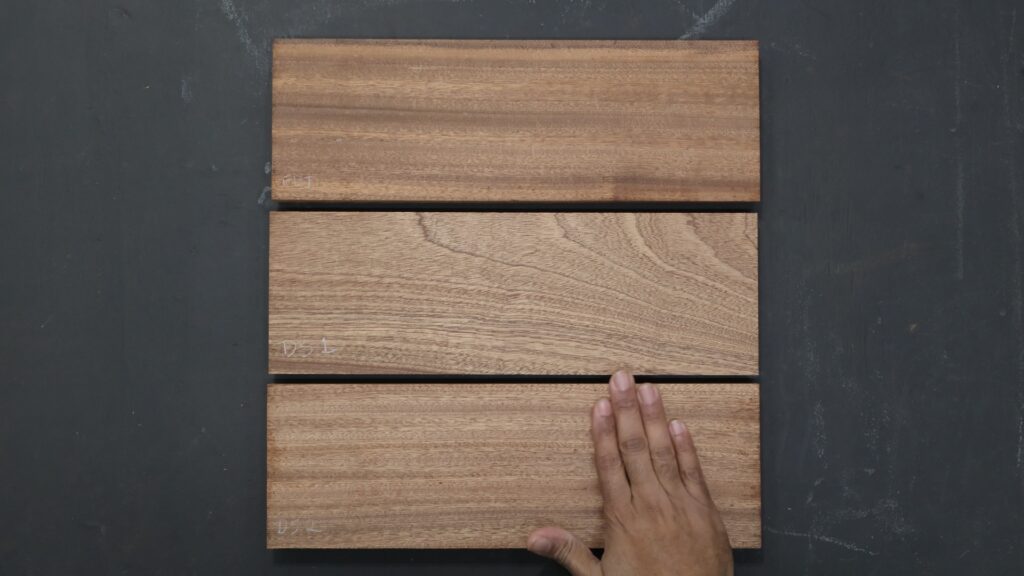
I ran identical sapele boards through both planers to see how they actually perform in real-world conditions. Here’s what I found:
Surface Quality – Winner: FindBuyTool
This is where the helical head really shows its advantage. All the surfaces were smooth, but the FindBuyTool was noticeably smoother than the DeWalt at both speed settings. The helical design just produces a smoother finish overall than straight-knives, especially with tear-out prone woods.
For Speed 1 vs. Speed 2 on the DeWalt, I couldn’t detect any meaningful difference in finish quality between the two speeds during this test. Both produced good, but not exceptional surfaces compared to the helical head.
Noise Level – Winner: FindBuyTool (Barely)
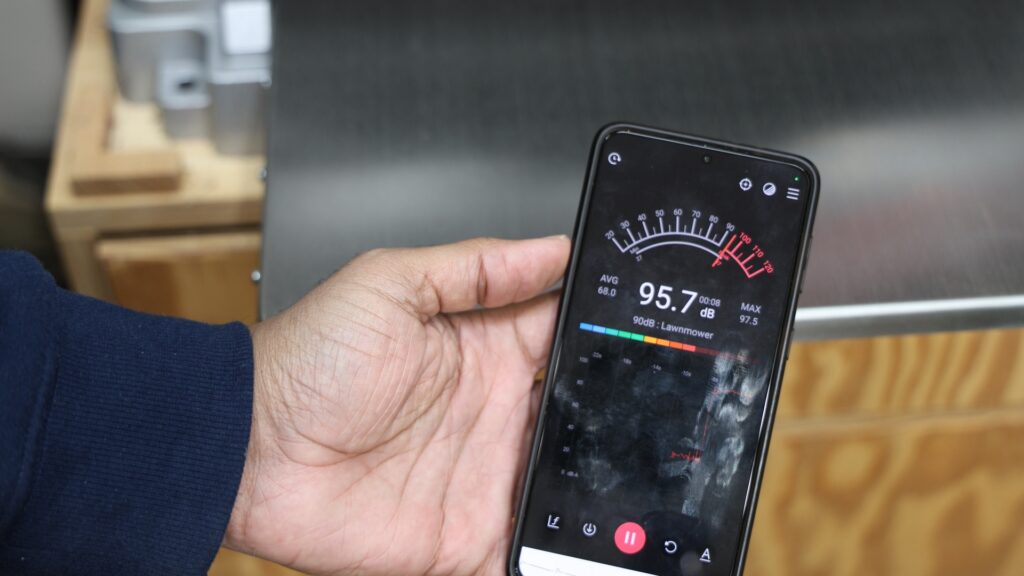
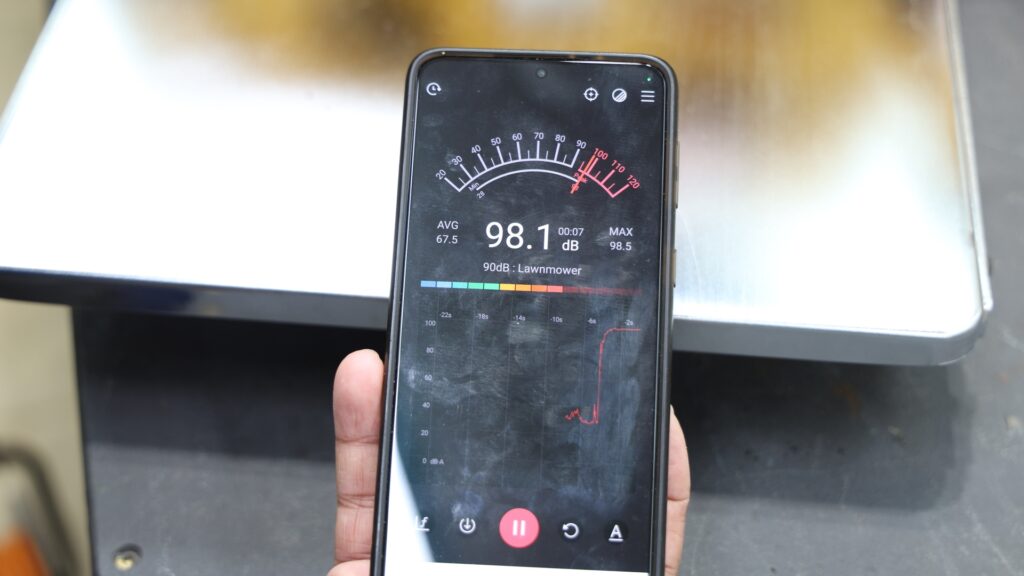
Using a decibel meter app on my phone:
- FindBuyTool: ~95-96 dB
- DeWalt: ~98 dB
The FindBuyTool is marginally quieter, but the difference isn’t dramatic. The real takeaway: always wear hearing protection regardless of which planer you use!
Dust Collection – Winner: DeWalt
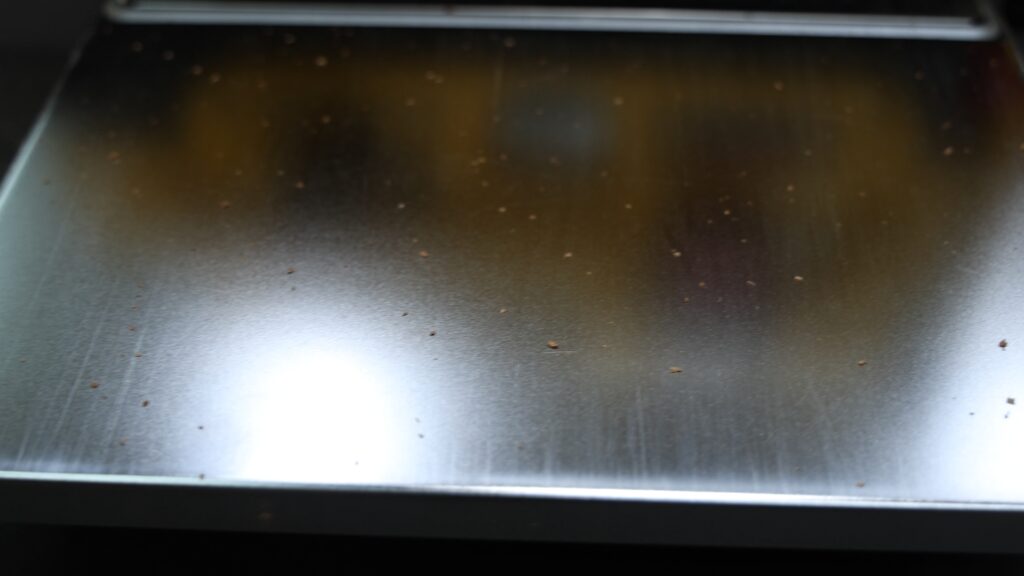
Both planers did a good job with my 4″ dust collection hose attached, capturing most of the shavings. The FindBuyTool probably left a little bit more behind than the DeWalt.
Speed – Winner: Tie
The FindBuyTool only has one speed, which is comparable to the DeWalt’s faster Speed 2. Before testing, I thought having only one speed might be a disadvantage for the FindBuyTool, but given how smooth the resulting surface was even at the faster speed, I’m not convinced a second speed would add much value.
Snipe – Winner: Slight edge to FindBuyTool
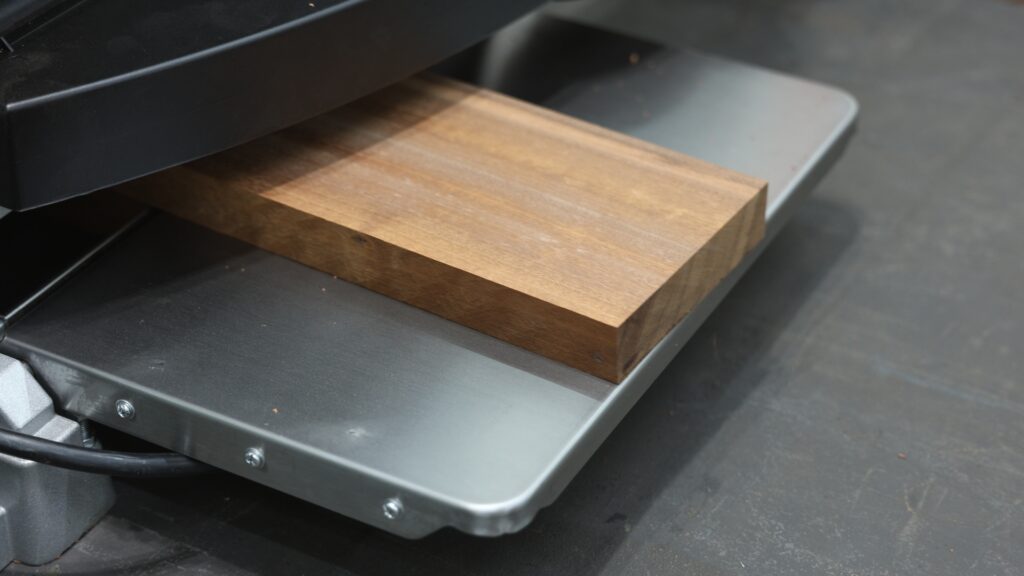
During smaller setup passes, neither planer produced noticeable snipe. But when taking the full 1/16” test passes, both planers showed some snipe, with slightly more from the DeWalt. Remember, these are not commercial grade machines—taking smaller passes will give you the best results with either one.
Usability Differences
Height Adjustment – Winner: DeWalt
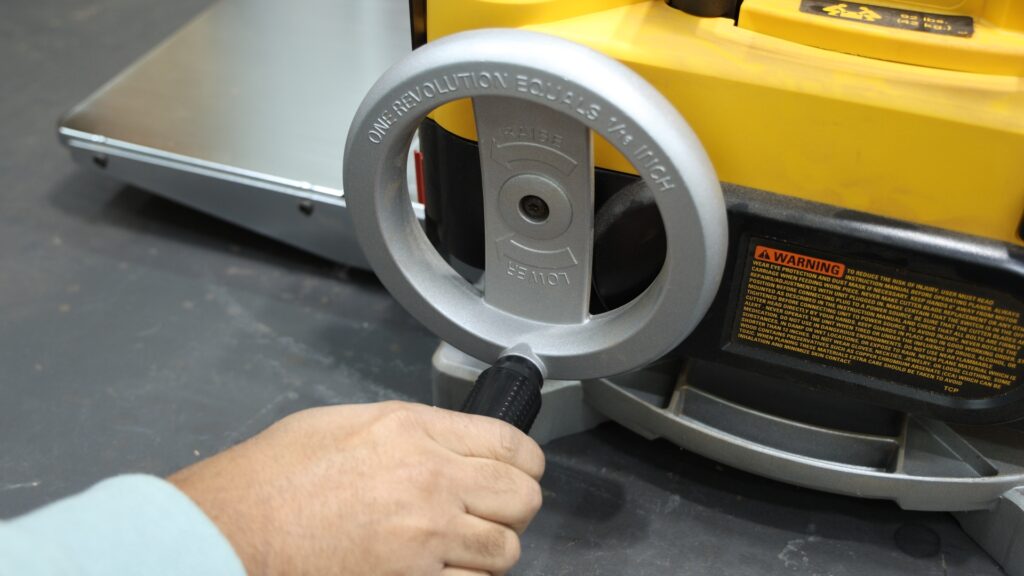
The DeWalt’s side-mounted crank is smoother and more ergonomic than the FindBuyTool’s top-mounted version. However, in a small shop, the DeWalt’s side crank can hit adjacent surfaces when wheeling the unit around.
The FindBuyTool features a carriage lock lever to secure your height setting, which the DeWalt doesn’t have. Though interestingly, I didn’t notice any carriage movement even when I forgot to engage the FindBuyTool’s lock.
Weight and Portability – Winner: FindBuyTool
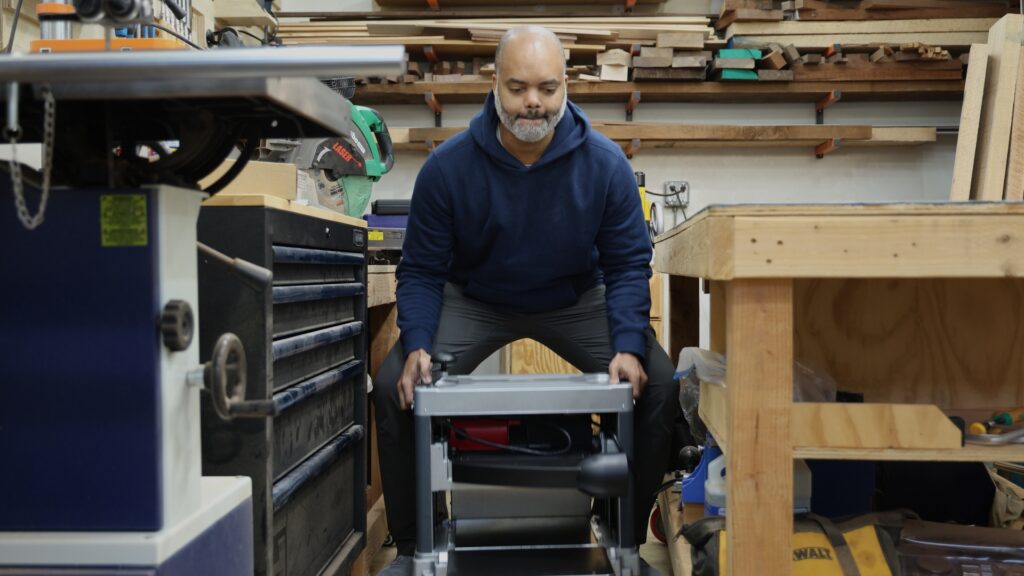
At 77 lbs vs. 92 lbs, the FindBuyTool is noticeably easier to move around. That 15-pound difference might not sound like much, but if you’re storing your planer on the ground and lifting it onto a work surface regularly, you’ll appreciate the lighter weight.
Tables and Setup – Winner: Tie
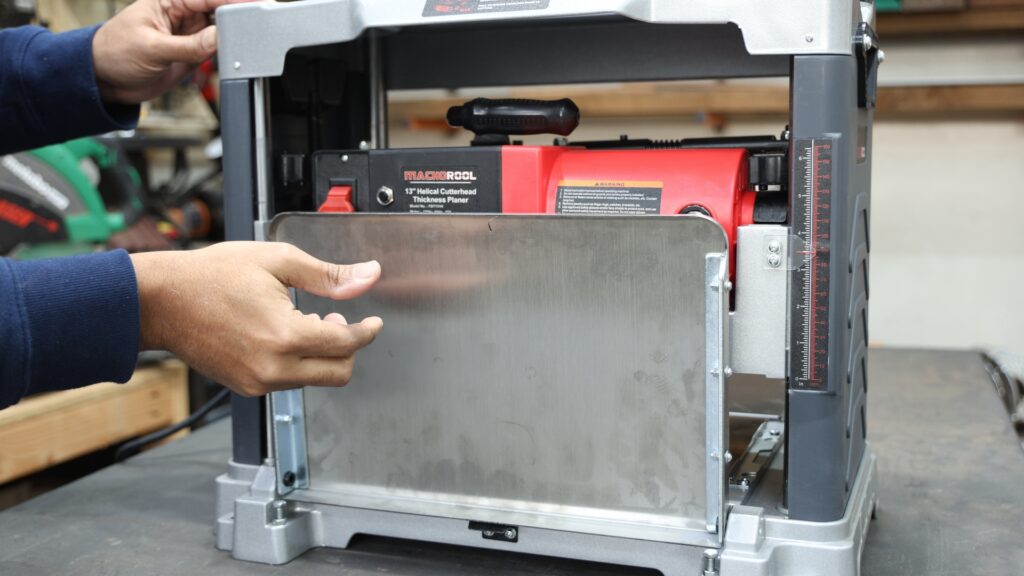
The FindBuyTool has spring-loaded tables that stay up when not in use, which is a nice touch. However, this only works perfectly on the infeed side—the outfeed side only stays up when the carriage is raised to the top due to the dust port placement. While the DeWalt doesn’t have spring-loaded tables, its tables do feel more robust.
Both planers include adjustment screws to ensure tables stay level with the bed.
Watch the Head-to-Head Test
Want to see it in action? Watch my full FindBuyTool FB131H vs. DeWalt 735X comparison on YouTube.
—or—
Watch the full video here.
Pros & Cons of Each Planer
FindBuyTool FB131H
Pros:
- Superior surface quality with minimal tearout
- Lighter weight (77 lbs vs. 92 lbs)
- Helical cutters last much longer than straight-knives
- Quieter operation
- Same price as premium straight-knife planers
- Dual sized dust ports
Cons:
- Single feed speed only
- Height adjustment not as smooth
- Less established brand with uncertain long-term support
👉 See price and availability on the FindBuyTool website — often ships free and tax-free for U.S. buyers.
DeWalt 735X
Pros:
- Well-established brand with proven reliability
- Dual feed speeds for different applications
- Excellent dust collection
- Smoother height adjustment mechanism
- Widely available parts and accessories
Cons:
- Heavier (92 lbs)
- Straight-knives produce more tearout on difficult woods
- Blades require more frequent replacement
- Slightly louder operation
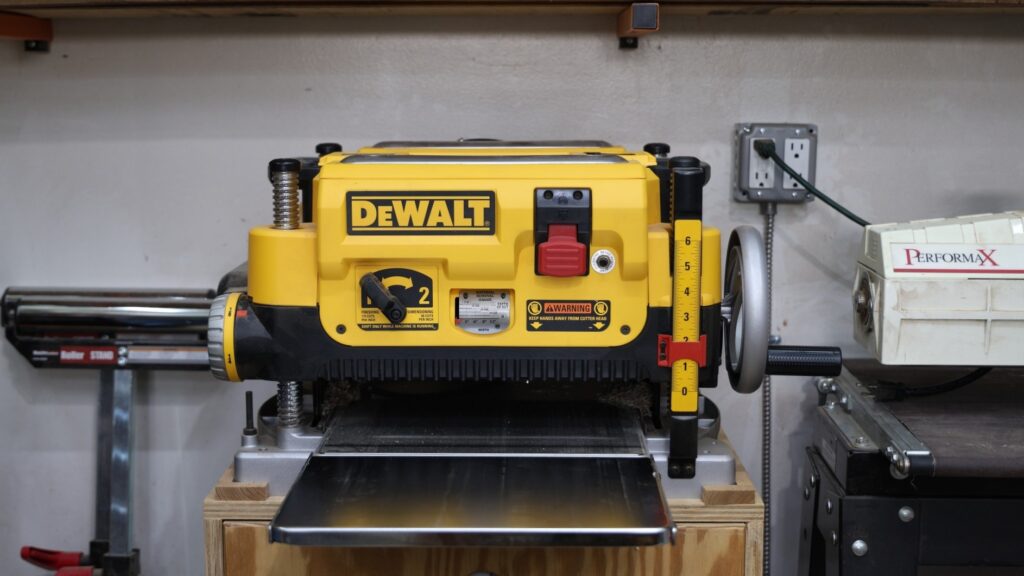
👉 If you want to try the DeWalt out for yourself, here’s the model I reviewed.
Which Planer Is Right for You – FindBuyTool FB131H vs DeWalt 735X?
Choose the FindBuyTool FB131H if:
- Surface quality is your top priority
- You work with figured woods or species prone to tearout
- You want the longest possible time between blade changes
- You have a small shop where weight matters
- You’re excited about getting helical head technology at this price point
Choose the DeWalt 735X if:
- You prioritize proven reliability and brand support
- You want the best possible dust collection
- You like having multiple feed speed options
- You prefer the smoothest height adjustment experience
- You work primarily with woods where tearout isn’t a major concern
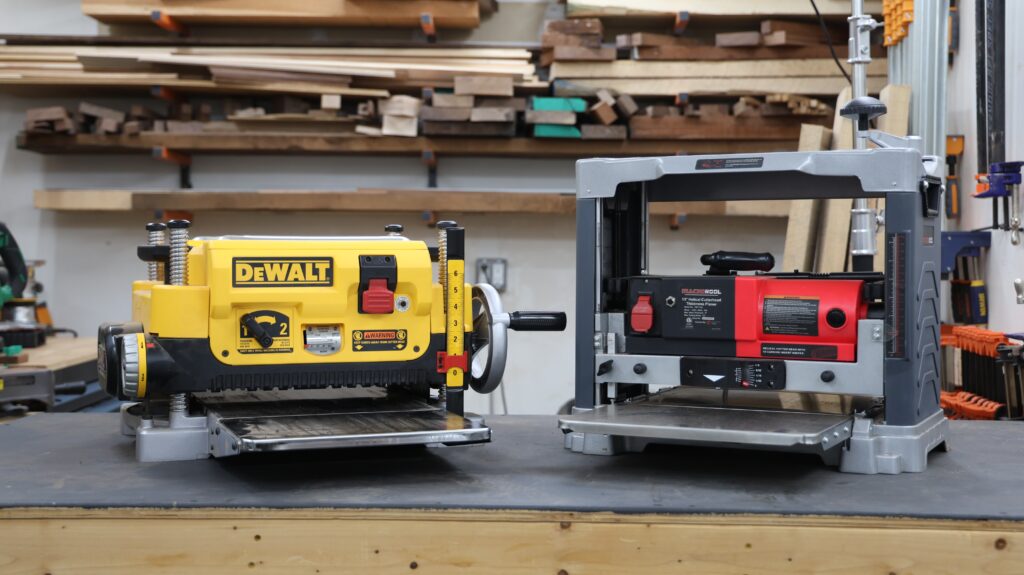
My take? If you’re choosing between these two planers today, the FindBuyTool represents the best value available for woodworkers that want to take advantage of helical head technology. Getting helical head performance at straight-knife pricing is hard to pass up, especially when the surface quality difference is so noticeable.
The DeWalt is a great planer, but if you want to take advantage of helical technology, the FindBuyTool gives you that technology without the typical premium price.
Frequently Asked Questions
Q: Is the surface quality difference really that noticeable? A: Yes, especially on figured woods or species prone to tearout. The difference is immediately visible when you compare boards side by side.
Q: Should I worry about FindBuyTool being a newer brand? A: It’s a consideration, but they’ve been around for several years and their direct-to-consumer model actually provides good customer access. Just be aware that long-term parts availability is less certain than with DeWalt.
Q: Can I upgrade my DeWalt 735X to helical later? A: Yes! You can buy an aftermarket helical head for around $300-400. It’s a 3-4 hour installation that requires some mechanical aptitude, but it’s definitely doable. I actually did that with my Dewalt 735X. Check out that review here!
Q: Which one should I choose for my first planer? A: If you’re buying your first planer and these are your two options, it really just comes down to if you want a helical head or not. If you do, the FindBuyTool’s your choice. If not, go with the DeWalt.
Both of these are solid planers that will serve you well. The question is whether you want proven reliability or cutting-edge performance at the same price point.