
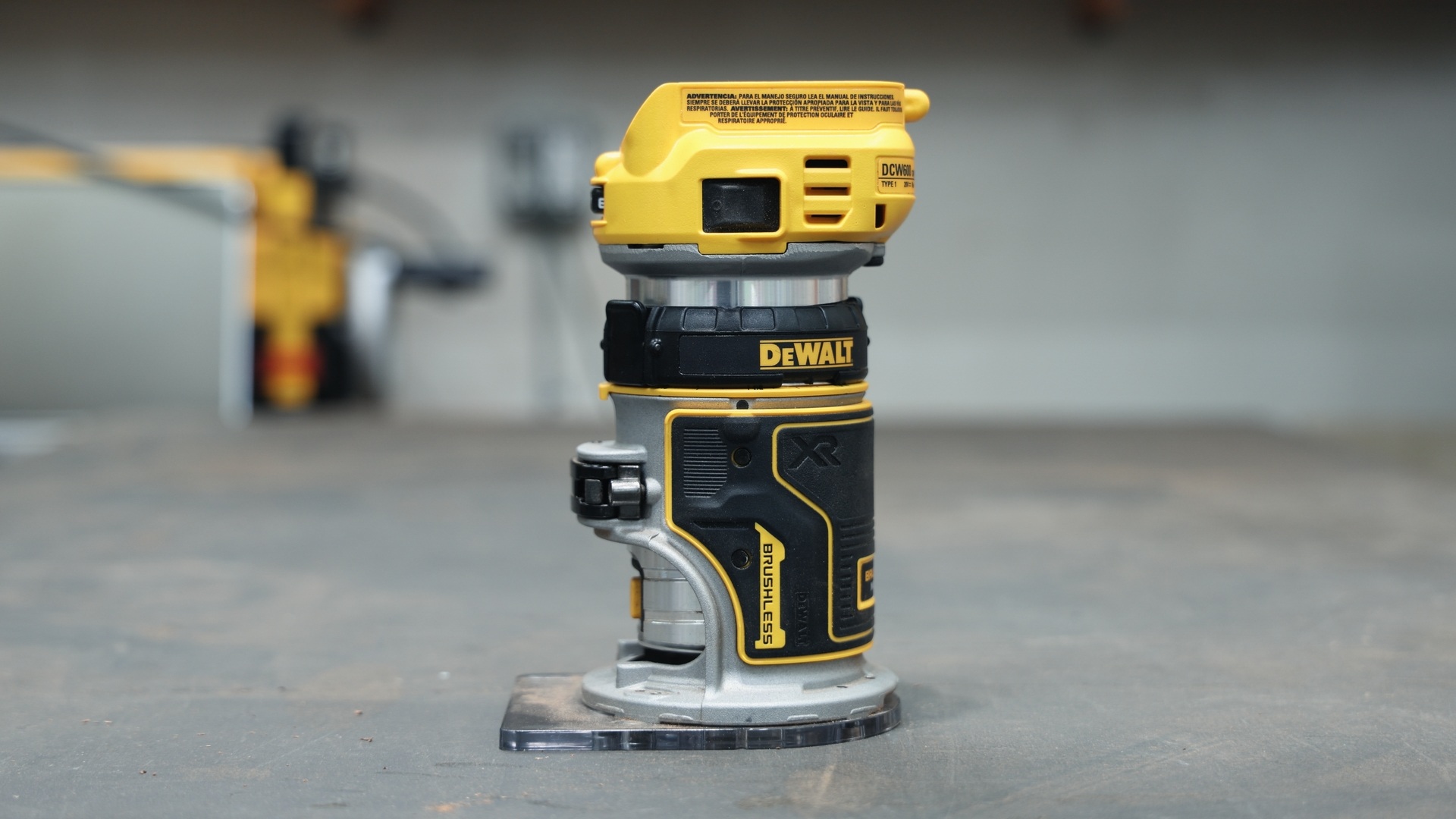
The DeWalt DCW600B 20V Max cordless router has been a market leader for years. But with a $219 price tag and minimal included accessories, does it still deserve its premium positioning? After extensive hands-on testing including aggressive power tests in hardwood against other routers in its class, I’ll help you decide if the DCW600B is the right router for your shop.
DeWalt DCW600B: At a Glance
Best For: Woodworkers already invested in the DeWalt 20V Max ecosystem who prioritize raw power and simplified depth adjustment
Price (MSRP): $219 (tool only), but can often be purchased for less
Bottom Line: The DCW600B delivers exceptional power and features DeWalt’s brilliant single-ring adjustment system, but the bare-bones accessory package at this price point is disappointing. This is an excellent router, and a no-brainer if you’re already in the DeWalt battery platform.
👉 Check current price on the DeWalt DCW600B here
DeWalt DCW600B Specifications
What’s in the Box?
Here’s where the DeWalt disappoints. For $219, you get:
- DCW600B router (tool only)
- 1/4″ collet wrench
No edge guide. No dust chute. No second base. The Milwaukee at $199 includes an edge guide, dust chute, and second base. Even the budget-friendly Metabo HPT at $149 includes more accessories. If you need these accessories, budget an additional $30-50 for aftermarket options.
Design & Ergonomics
The DCW600B is the largest cordless palm router I tested with the biggest circumference. At 3lb 7oz (without battery), it was the second-heaviest. Yet it doesn’t feel cumbersome—DeWalt nailed the weight distribution and grip design.
The large rubberized overmold grip provides secure, comfortable hand placement. This is a major improvement over DeWalt’s all-metal corded routers. The grip diameter works well for medium to large hands.
The power switch is covered with a rubber covering that makes it slightly more difficult to operate than a simple toggle or button, and the labeling can be hard to read. It’s not a dealbreaker, but competitors have cleaner switch designs.

Base Design
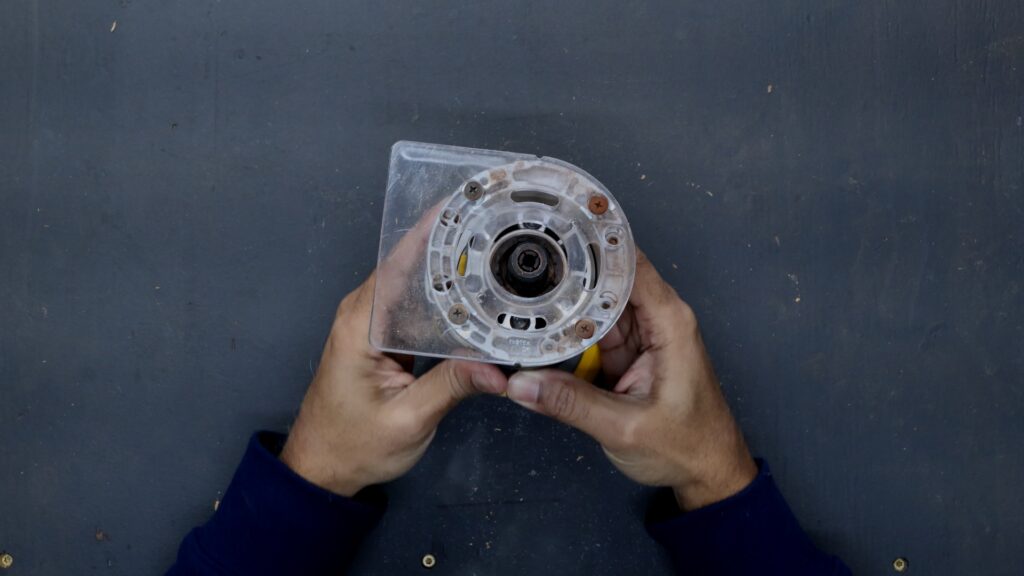
The D-shaped base is excellent and larger than most competitors, which enhances stability. The square side provides a place to put your fingers to secure the router especially when doing things like edge profile work, while the rounded side is perfect for running along straight edges.
The Adjustment System: DeWalt’s Best Feature
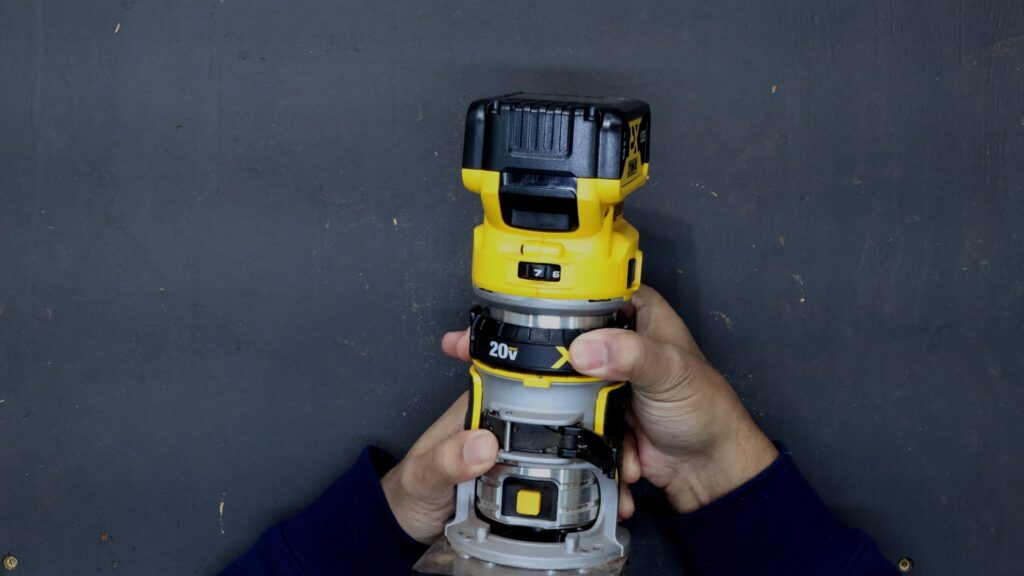
This is where the DCW600B shines. DeWalt eliminated the typical macro/micro adjustment dance with a single-ring system:
- Unfasten the latch
- Rotate the adjustment ring to desired depth
- Re-fasten the latch
The yellow measurement ring shows 1/64″ per tick mark and one full rotation will raise/lower the router bit 1/2″. This makes precise, repeatable settings easy to achieve.
The Trade-Off: When covering significant distance, you’re turning that ring for a while. Routers with dedicated macro buttons are faster for large changes. But for precision work with small adjustments, this system is excellent and intuitive.
Power & Performance
The Power Test
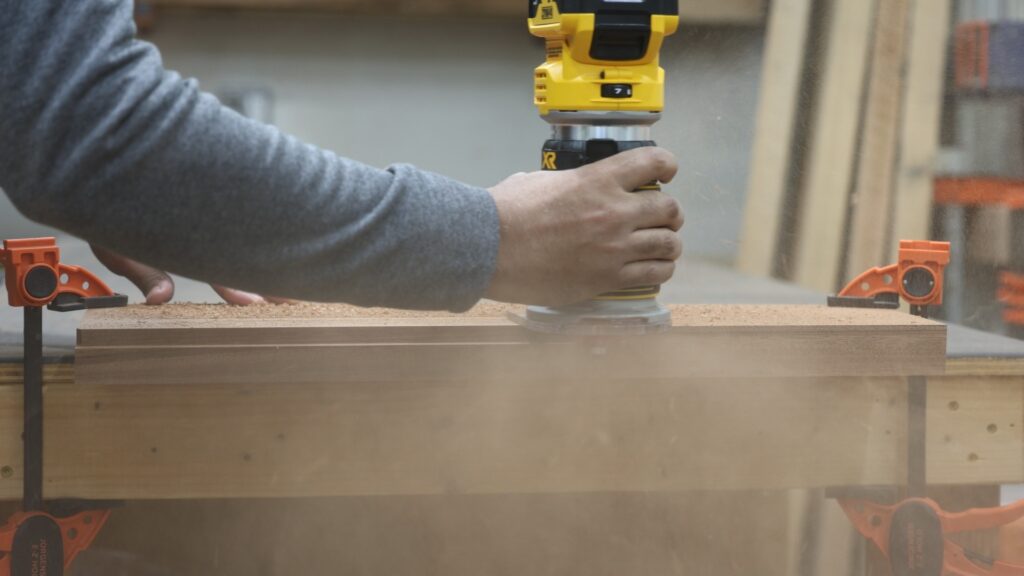
I stressed-tested all routers by routing a 1/2″ × 1/2″ rabbet in 2 feet of dense sapele hardwood.
DeWalt DCW600B Result: 10 seconds with zero shutdowns (5ah battery)
This tied the Bosch for fastest in the entire test. For context:
- Bosch: 10 seconds (4ah battery)
- DeWalt: 10 seconds (5ah battery)
- Flex: 11 seconds (2.5ah battery)
- Milwaukee: 13 seconds (2ah battery)
- Metabo HPT: 13 seconds
- Ridgid: 13 seconds (4ah battery)
- Makita: 21 seconds (2ah battery)
- Ryobi: 38 seconds (2ah battery)
Real-World Performance
The DCW600B handles typical routing with authority:
Edge Profiling: Powers through roundovers, chamfers, and ogee profiles in hardwood with fewer passes than lower-powered competitors.
Template Routing: Tracks smoothly with bearing-guided bits without speed drop-off. The larger base aids stability.
Dado Cuts: Has sufficient torque for straight-bit dados in dense hardwoods.
The variable speed dial (16,000 – 25,500 RPM) optimizes performance for different materials and bit sizes.
DeWalt DCW600B vs the Competition
DeWalt DCW600B vs Flex FX4221-Z
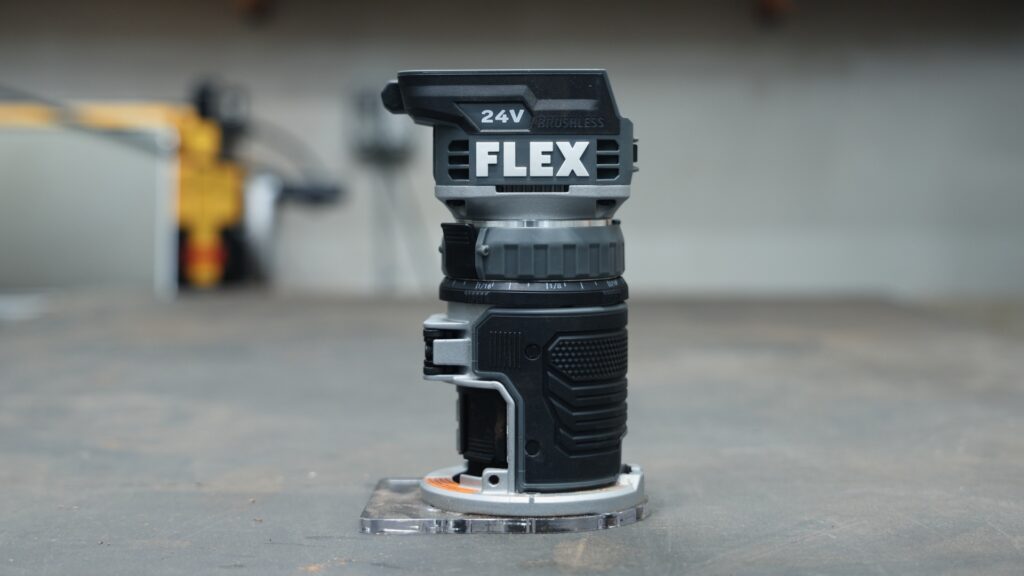
The Flex appears benchmarked directly against the DeWalt and improves on it in key ways.
Where Flex Wins:
- Price: $199 vs $219
- Accessories: Includes edge guide, dust chute, second base, AND centering cone
- Power Switch: Large, easy-to-press button
- Spindle Lock Switch: For easier bit changes and accidental start prevention
Where DeWalt Wins:
- Battery Ecosystem: DeWalt’s 20V Max platform is more extensive
- Brand Recognition: Decades of router manufacturing expertise
Verdict: If you’re locked into DeWalt’s battery platform, the DCW600B is excellent despite poor accessories. If you’re not committed to a battery ecosystem, the Flex offers better value with virtually identical performance.
DeWalt DCW600B vs Milwaukee 2723-20
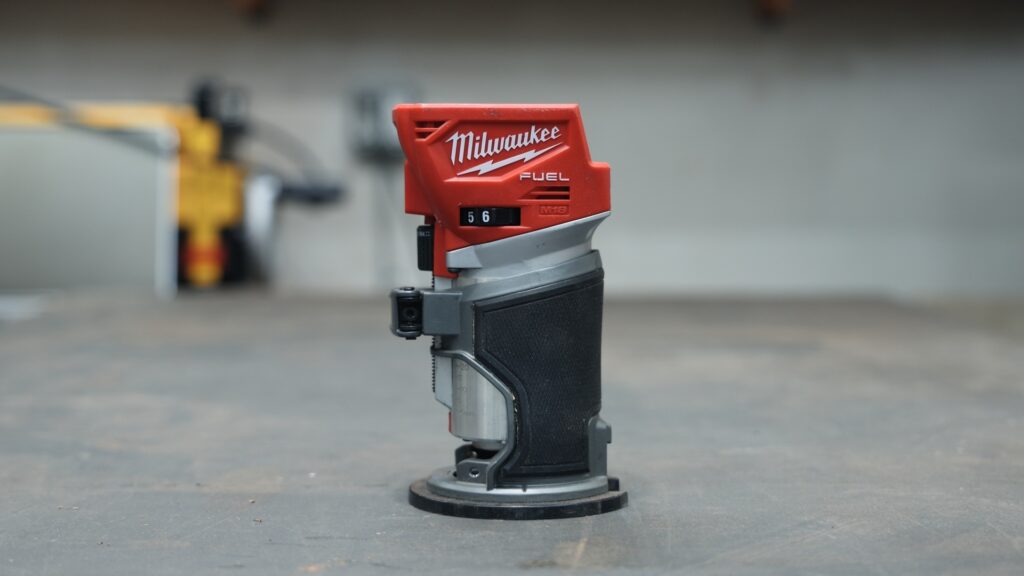
Where DeWalt Wins:
- Power: 10 seconds vs 13 seconds (though Milwaukee used smaller battery)
- Adjustment: Single-ring design is simpler
- Base Size: Larger D-shaped base
Where Milwaukee Wins:
- Price: $199 vs $219
- Accessories: Includes edge guide, dust chute, AND second base
- Weight: 3lb vs 3lb 7oz
Verdict: Both are excellent with extensive battery ecosystems. Milwaukee offers better value; DeWalt offers slightly more power and a more straight forward adjustment system.
DeWalt DCW600B vs Bosch GKF18V-25N
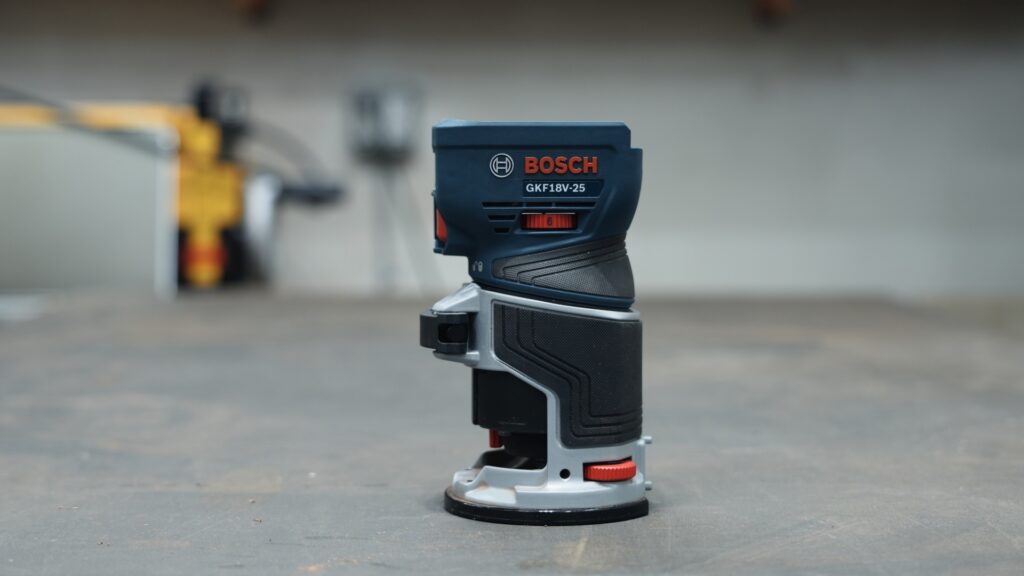
Where Bosch Wins:
- Weight: 2lb 8oz vs 3lb 7oz—a full pound lighter
- Ergonomics: Molded finger grips reduce fatigue
- Safety: Spindle lock switch + drop detection
- Accessories: Edge guide, TWO dust chutes, chip shield
Where DeWalt Wins:
- Adjustment Simplicity: Single ring is more intuitive
- Base Size: Larger base provides more stability
- Battery Ecosystem: DeWalt’s platform is more extensive
Verdict: Same $219 price, but Bosch delivers more innovation and better ergonomics. If you’re not locked into a battery platform, the Bosch is a great option.
DeWalt DCW600B vs Makita XTR01Z
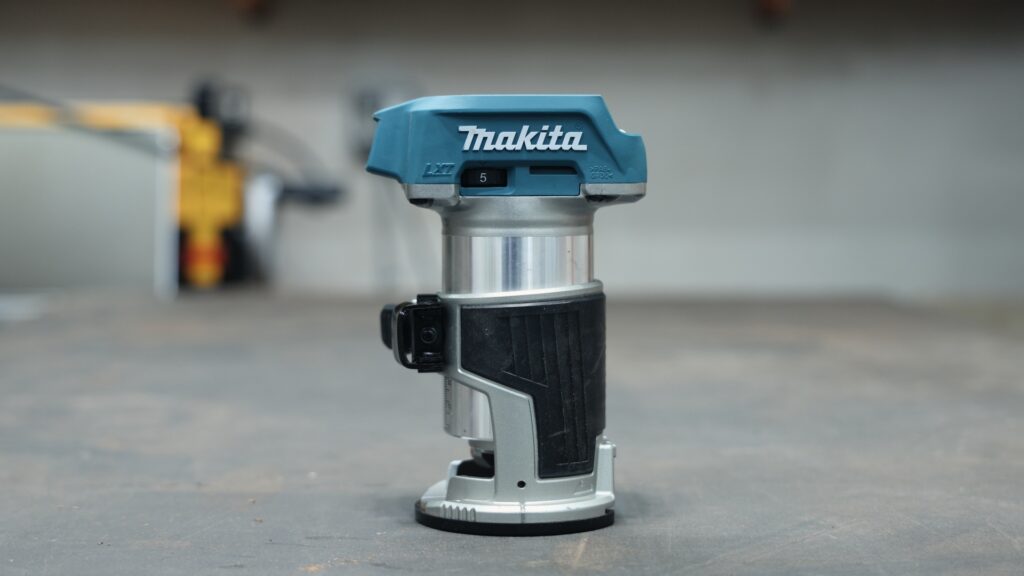
Where DeWalt Wins:
- Power: 10 seconds vs 21 seconds (though Makita used smaller battery)
- Safety: Has spindle brake (Makita doesn’t—inexcusable at this price)
- Adjustment: Superior to Makita’s gravity-prone design
- Base Design: Larger, more versatile
Verdict: Unless heavily invested in Makita batteries, there’s no compelling reason to choose the XTR01Z over the DCW600B at the same price point.
Pros and Cons
Pros
- Tied for fastest performance in hardwood tests
- Excellent single-ring adjustment system
- Large, stable D-shaped base
- Comfortable grip despite size
- Plunge base available
- Extensive DeWalt 20V Max battery ecosystem
Cons
- Lacking accessory package at top of the market price
- Size may not be ideal for smaller hands
- No advanced safety features
Who Should Buy the DeWalt DCW600B?
You’ll Love This Router If:
- You’re invested in DeWalt 20V Max batteries – This is the primary reason to buy it
- You prioritize raw power – Top-tier performance in hardwoods
- You don’t prioritize additional router accessories – The bare package matters less
- You value simple adjustments – The single-ring system is intuitive
- You value a large stable base – The most stable versatile base in the market
Look Elsewhere If:
- You’re not locked into a battery platform – Other routers offer better value for the money
- Budget matters – Ridgid ($179), Metabo HPT ($149), or Ryobi ($129) offer lower cost options
- You want the most features – Bosch costs the same with better accessories and innovation
- Size matters – Lighter/Smaller options available (Bosch at 2lb 8oz)
See How It Compares:
I tested the DeWalt alongside seven competing routers in a full head-to-head video. You can watch that comparison here: