
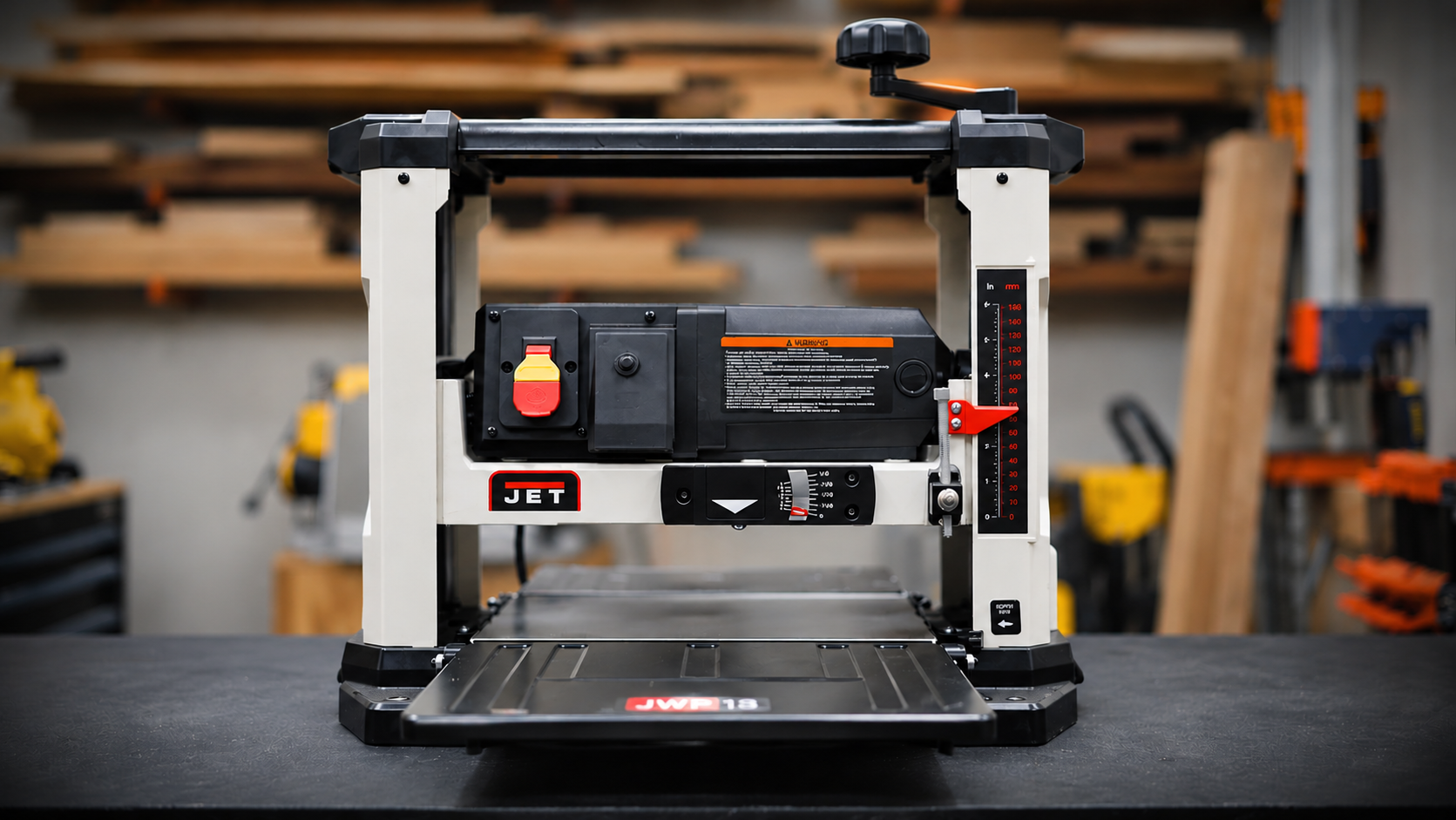
I put the JET 13-inch helical head planer (JWP-13BTHH) straight to work milling white oak for a project. The boards came out glass-smooth whether I ran them through the left side, right side, or middle of the cutterhead. The motor never sounded like it was struggling. I got a little snipe at both ends, like I do with most benchtop planers. Dust collection could be better. Even with a hose hooked up, the JET left some chips behind. I still think it makes a good case for itself in a small shop. You get a true helical head, a five-year warranty, and ergonomic handles that make the planer easier to move when you need to clear the bench.
Acme Tools sent me this planer to test, but they had no input on this review and didn’t get to see it before it was published. All opinions are my own.
👉🏾Check the current price at Acme Tools
What comes with the JET JWP-13BTHH?
The helical head comes already installed. I had to attach the crank handle and dust chute, and that was about it for assembly. JET includes five spare carbide inserts, tools for setup and maintenance, and a push stick. There’s a spot to store the included T-handle hex screwdriver on the dust chute, which is handy when you need it again.
The Good
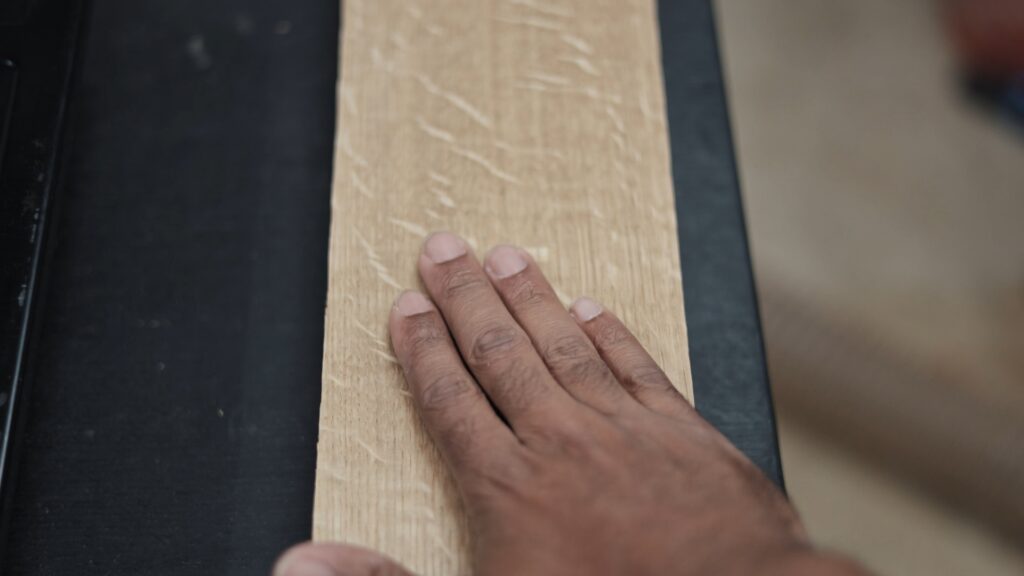
The helical head left a glass-smooth finish on white oak
The JET has a true helical cutterhead. On some heads sold as spiral or helical-style, the carbide inserts are staggered around the cutterhead, but each cutting edge meets the wood straight on, like a short straight knife. On a true helical head like the JET’s, the cutting edges themselves are set at an angle. That angle produces a shearing cut as each edge passes across the wood. That shearing action can reduce tear-out when planing figured wood or cutting against the grain. Compared with straight knives, helical heads also tend to run quieter and require less maintenance.
I had white oak to mill for a project, so I used that for the test. On every part of the head I tried, I got the same smooth surface. Each insert has four usable edges, so if I nick one, I can rotate that insert to a fresh edge and keep going.
JET got the single feed speed right
With only one feed speed, I want a planer that gets through a stack of boards at a reasonable pace and still leaves a clean finish. At 24.6 feet per minute, the JET felt about right. I never found myself wishing it would hurry up, and the motor never bogged down on the passes I took in white oak.
The JET sounded noticeably quieter than my DeWalt 735 with its original straight knives. To my ears, it was about as loud as the other helical-head planers I’ve used. I still recommend wearing hearing protection.
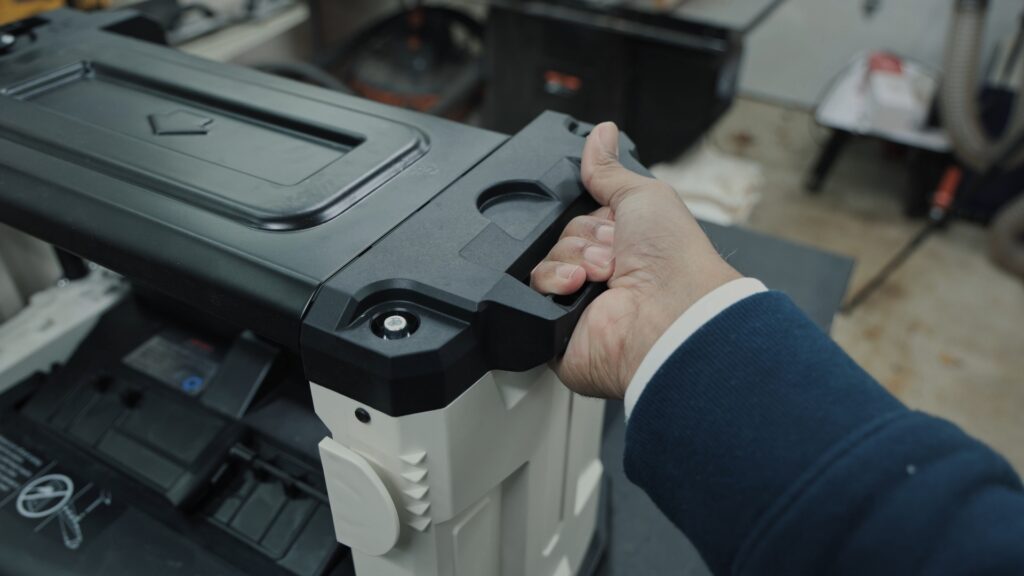
The handles make a difference if you store it off the bench
I normally keep my planer on a rolling cabinet. I’ve been keeping the JET on the floor while it’s been in my shop. At about 66 pounds, it’s still a lift, but the handles stick out far enough that I can wrap my whole hand around them. That gives me a better grip when I pick it up.
The thickness scale and depth-of-cut gauge are easy to read, and both show inches and millimeters. The depth-of-cut gauge reads at the center, so that’s where I put the board when I want to check how much I’m about to take off. There’s no carriage lock lever. I tend to forget to use those anyway, and I didn’t miss it on this one.
The Bad
Dust collection is where I’d most like to see an improvement
The chute takes either a 2-1/2-inch or 4-inch hose, but there’s no internal blower to help move the chips out. I still had cleanup after planing. If you’re used to the chip ejection on a DeWalt 735, this is one of the differences you’ll notice. The side-facing chute can also get in the way when you fold up the rear table for storage.
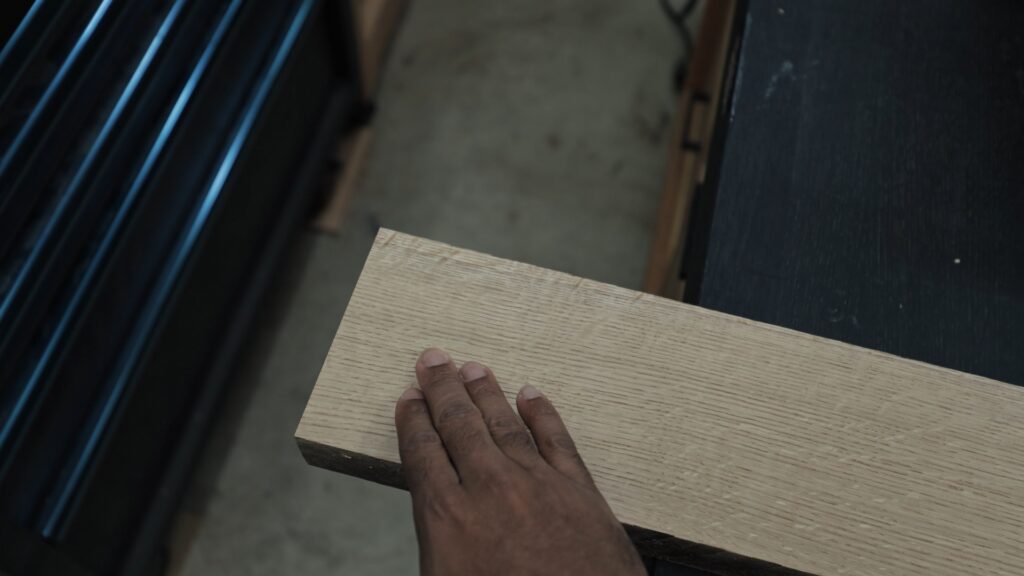
I got a little snipe at both ends
I could barely feel it, but there was a slight dip at both ends of the white oak I planed. It was mild for a benchtop planer. If I were milling a piece where I needed every inch at final thickness, I’d leave a little extra length and trim the ends afterward.
The Weird
You get one adjustable thickness stop
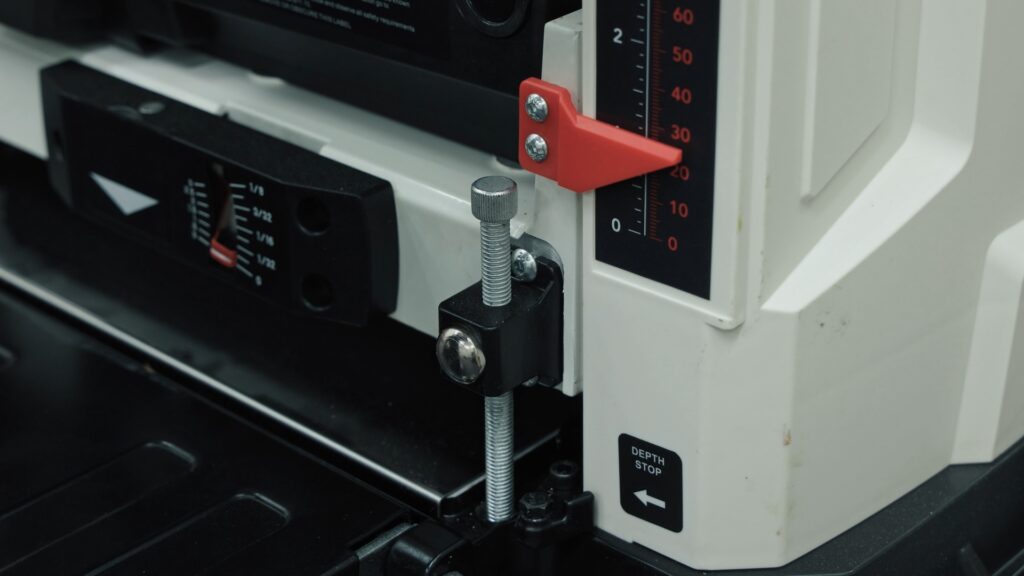
I expected a selector with common thicknesses like 1/2 inch and 3/4 inch. The JET gives you one stop you can set to whatever thickness you’re working toward. There’s a little swing-away cover that lets you bypass it when you need to plane thinner stock.
At first I thought I’d rather have the presets. Then I remembered how often I actually use them. I can see myself getting more use out of this one. If I’ve milled all the stock for a project and mess up a part later, I can come back to that same thickness, even if it was something odd like 11/16 inch.
Where the JET is a good value
At around $800, the JET is one of the least expensive true helical-head planers I’ve found. I’d buy it for the smooth finish I got on white oak, the five-year warranty, and the handles that make it easier to move on and off the bench. The extra cleanup is the tradeoff I noticed most.
How does the JET compare to the one-speed FindBuyTool FB131H, another affordable true helical-head planer? Both left excellent finishes in my shop. The JET was easier for me to carry, and its five-year warranty is a big part of why I’d pay more for it. If keeping the price as low as possible is your priority, my FindBuyTool FB131H review covers the cheaper planer I’d also consider.